


Off-Grid Solar System Guide: How to Go Solar Without the Grid
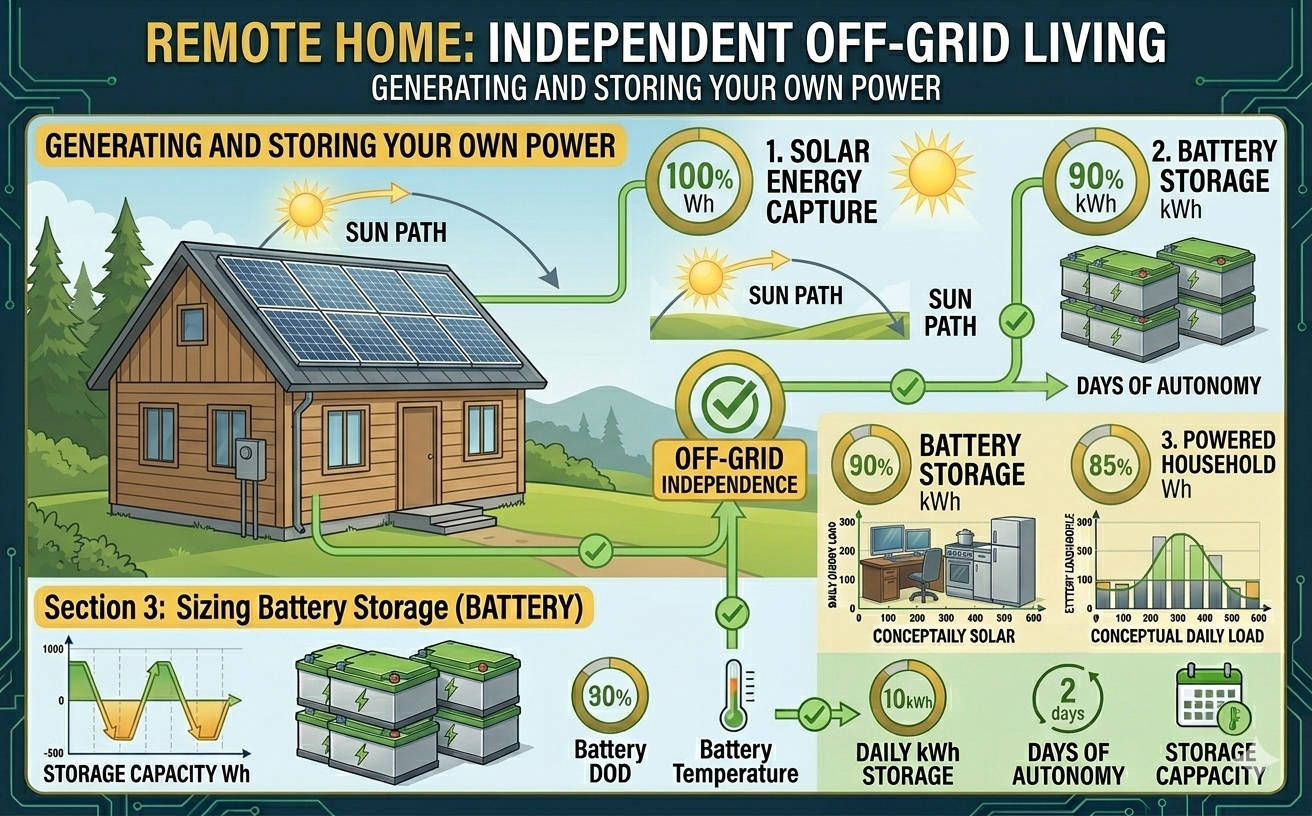
For homeowners, businesses, and remote locations, an off-grid solar system offers complete energy independence. Unlike grid-tied systems, off-grid solar allows you to generate, store, and use your own electricity without relying on the utility company.
This guide will explain what an off-grid solar system is, how it works, and key components to ensure reliable power anywhere.
What Is an Off-Grid Solar System?
An off-grid solar system is a standalone solar power setup that is not connected to the public electricity grid. These systems are ideal for:
Remote homes and cabins
Rural communities
Emergency backup power
Mobile or temporary installations
Off-grid systems rely on solar panels, solar inverters, and solar battery storage to provide a continuous and reliable electricity supply.
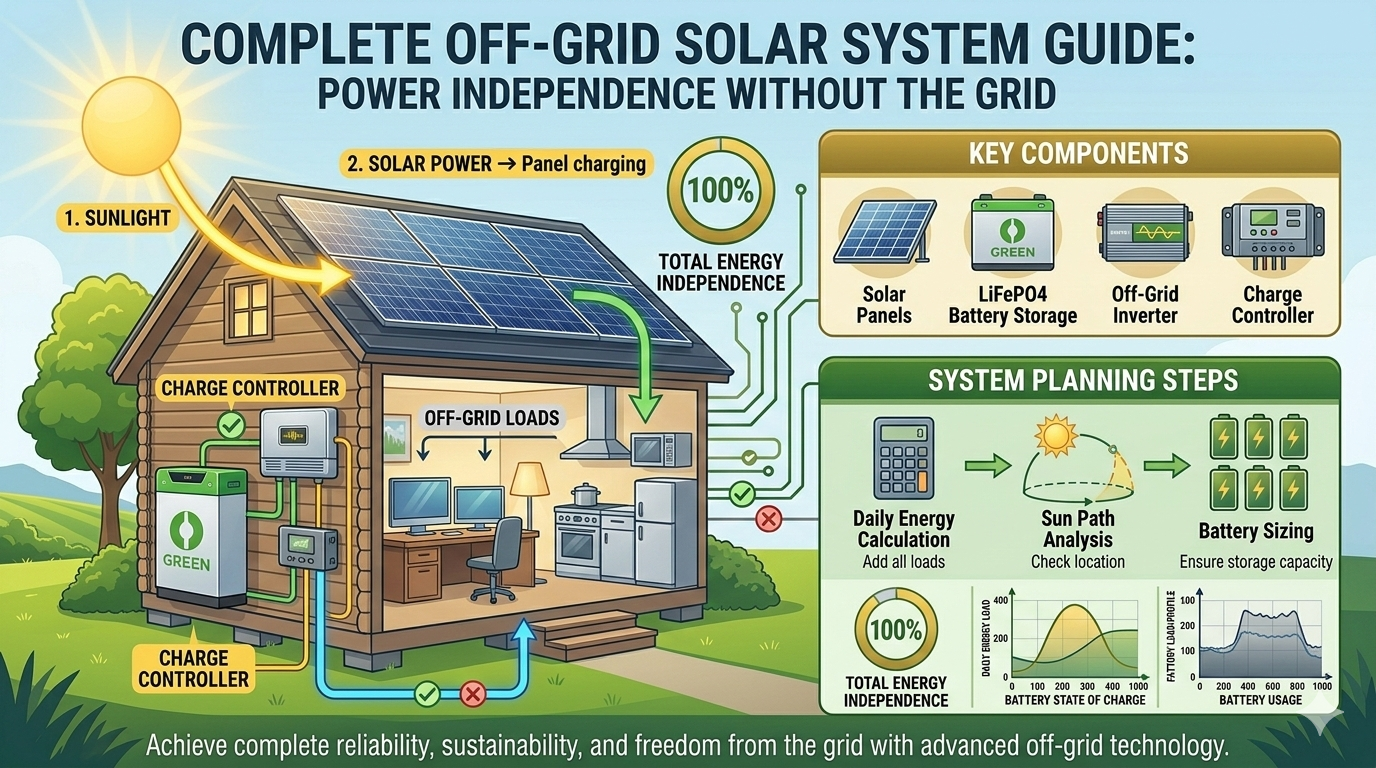
How Does an Off-Grid Solar System Work?
Solar Panels Capture Sunlight
Solar panels convert sunlight into DC electricity.
Power Goes Through a Solar Inverter
A solar inverter converts DC into AC electricity suitable for home appliances.
Battery Storage Keeps Excess Energy
Excess electricity is stored in batteries for nighttime or cloudy days.
Energy Management System Optimizes Usage
Advanced systems monitor energy consumption, battery level, and power flow for maximum efficiency.
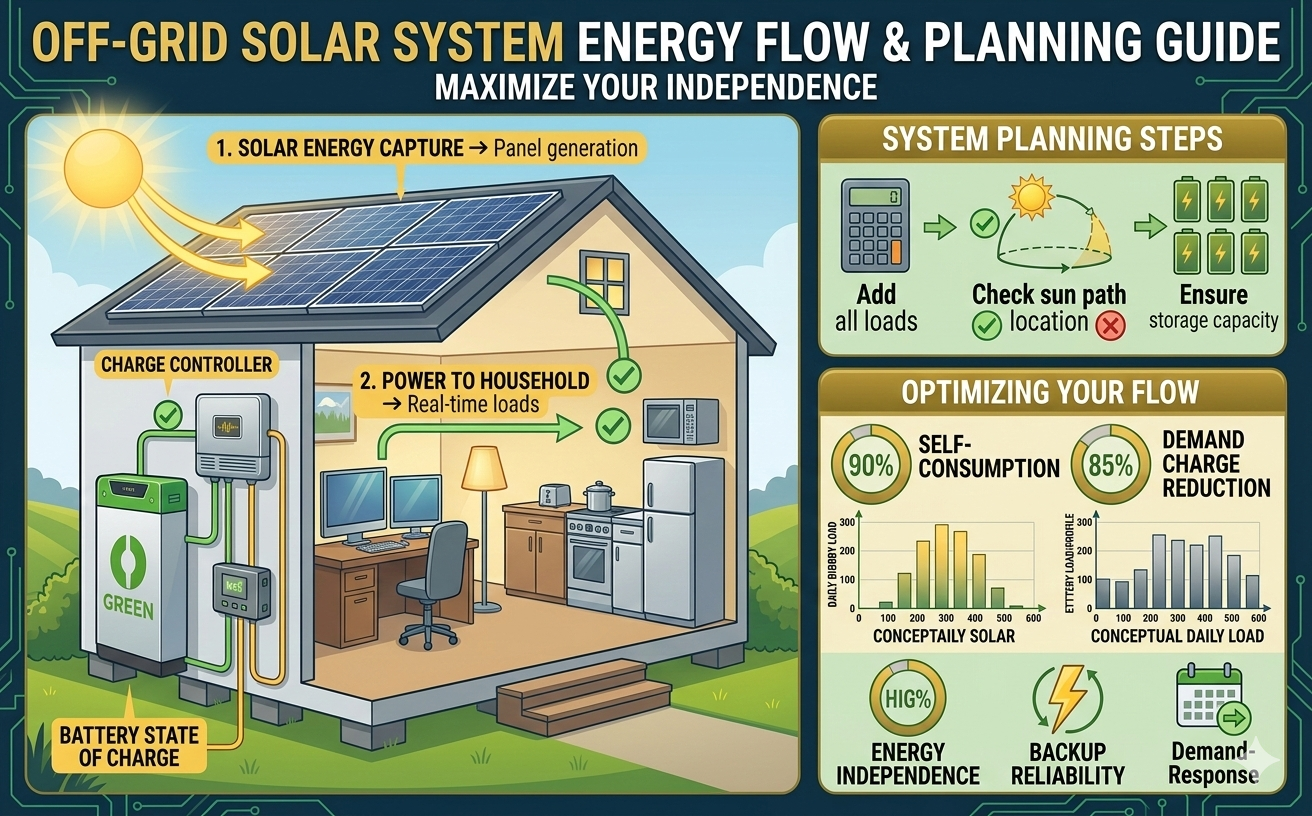
Key Components of an Off-Grid Solar System
1️⃣ Solar Panels
High-efficiency panels generate the energy required for your system. Residential and commercial installations may use monocrystalline or polycrystalline panels depending on efficiency and budget.
2️⃣ Solar Battery Storage
Batteries store excess solar energy. Popular options include lithium-ion, lead-acid, and LiFePO₄ batteries for long-term reliability.
3️⃣ Solar Inverter
The inverter converts DC electricity into AC and ensures your devices get clean, stable power. For off-grid systems, hybrid or pure sine wave inverters are preferred.
4️⃣ Charge Controller
This device prevents overcharging or deep discharge of the battery, extending battery lifespan and system efficiency.
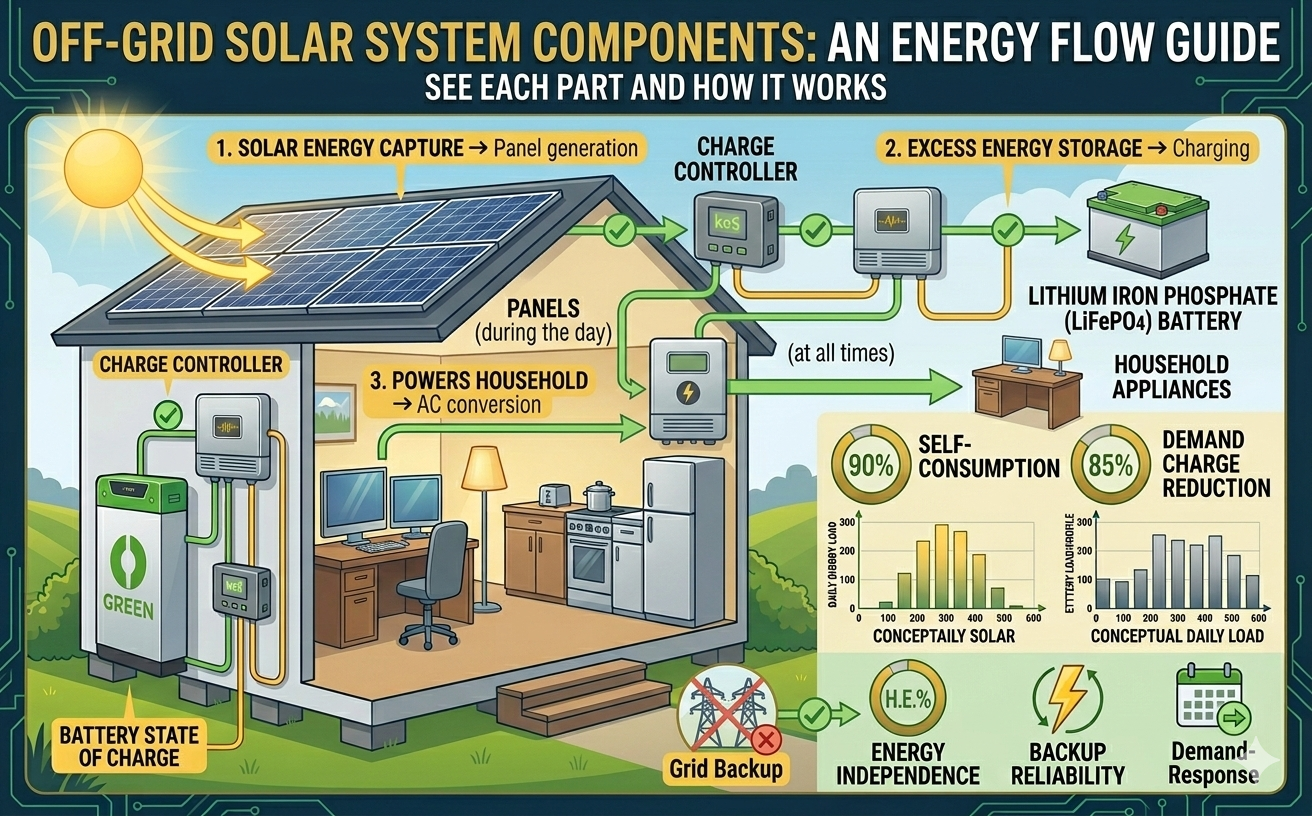
Designing an Off-Grid Solar System
When designing an off-grid solar system, consider:
Daily energy usage: Calculate total electricity consumption
Peak demand: Identify the highest power requirement at any time
Battery capacity: Ensure storage covers cloudy days or emergencies
Panel array size: Ensure enough panels generate required energy
Location & sunlight availability: Sun exposure affects system performance
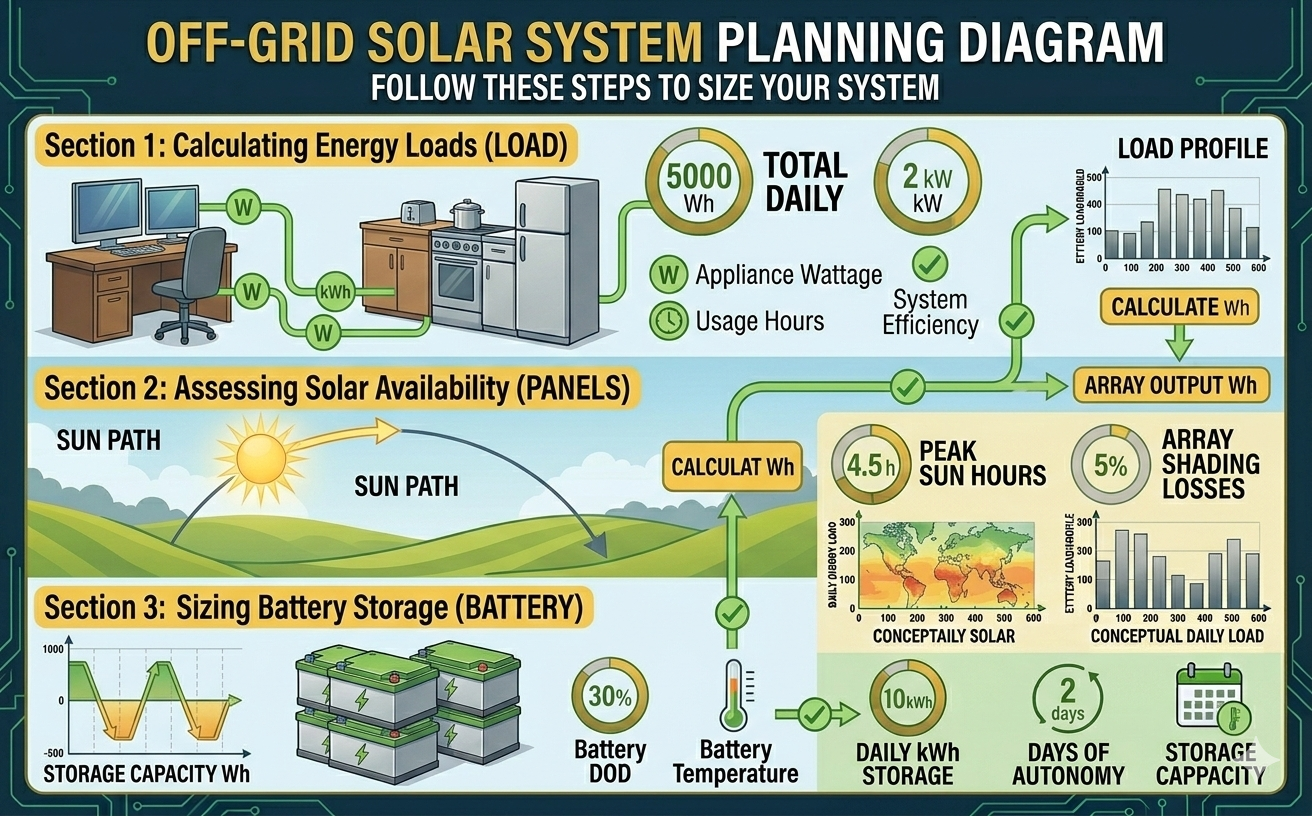
Benefits of an Off-Grid Solar System
Energy Independence: No reliance on the utility grid
Reliable Backup Power: Continuous electricity during outages
Cost Savings: Avoid rising electricity rates over time
Sustainable & Clean: Reduce carbon footprint and environmental impact
Remote Power Access: Ideal for cabins, farms, and off-grid homes
Is Off-Grid Solar Right for You?
Off-grid solar systems are best for:
Remote areas without reliable grid access
Users seeking full control over energy usage
Emergency preparedness and backup solutions
For many homeowners, pairing solar panels with battery storage and a quality inverter ensures reliable, sustainable energy without grid dependency.
Final Thoughts
Going off-grid is no longer just a dream—it’s achievable with today’s solar technology. By combining solar panels, inverters, and battery storage, an off-grid solar system can provide a reliable, cost-effective, and eco-friendly solution for homes, businesses, and remote locations.