

What are the available solar cell sizes?
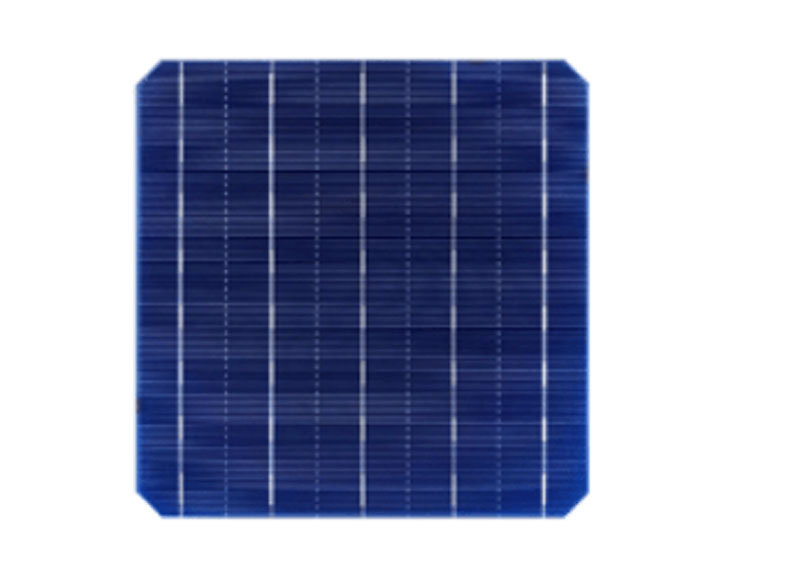
The core of the photovoltaic solar panel is the solar cell, divided into monocrystalline solar cell sheet
and polycrystalline solar cell sheet, due to the efficiency bottleneck, polycrystalline solar cell sheet
market share is getting less and less, the current monocrystalline solar cell sheet for the mainstream
market.
1. monocrystalline battery cell large size has become the mainstream of the market, before 2018 125
mm 156.75mm phased out, now basically extinct, the current mainstream size of 158.75mm (G1) 166
mm (M6) 182mm (M10) 210mm (G12) mainly.
2. solar cell sheet according to the printing screen grinding 5bb 6bb 9bb 10bb 11bb 12bb 13bb. ver-
sion of the general half-grid screen, 210mm (G2) 2 ½ and 3 points coexist.
Solar cell sheet size future trends: according to photovoltaic solar market authority predicts 158.75mm
(G1) 166mm (M6) with time and technological progress, will be phased out, the future to 182mm (M8)
210mm (G2) as the mainstream.
Solar cell: production process
Currently the mainstream solar cell production process has Perc N Topcon N HIT, Perc thickness 170-180um
process mainstream efficiency 22.8%, corresponding to 158.75mm 5.7W/pcs 166mm 6.2W/pcs 182mm 7.5
W/pcs 210mm 10.1W/pcs.
N Topcon and N HIT thickness 120-160um process mainstream efficiency 23.8%, corresponding to 158.75m-
m 6.0W/pcs 166mm 6.55W/pcs 182mm 7.85W/pcs 210mm 10.5W/pcs
Solar Cells: Technical Analysis.
N-type PERT solar cell technology
1. Fully diffuse backfield passivation structure solar cell wafer, usually with PN junction on the front and fully diffuse backfield on the back.
2. The simplest structure, the earliest application of N-type solar cells.
3. Bifacial structure, bifacial rate of 80-95%, silver-aluminum grid line on the front, silver-aluminum grid line
on the back.
9. No competitive advantage over PERC in terms of mass production efficiency and cost.
TOPCON (Tunneling Oxide Passivation Contact) solar cells
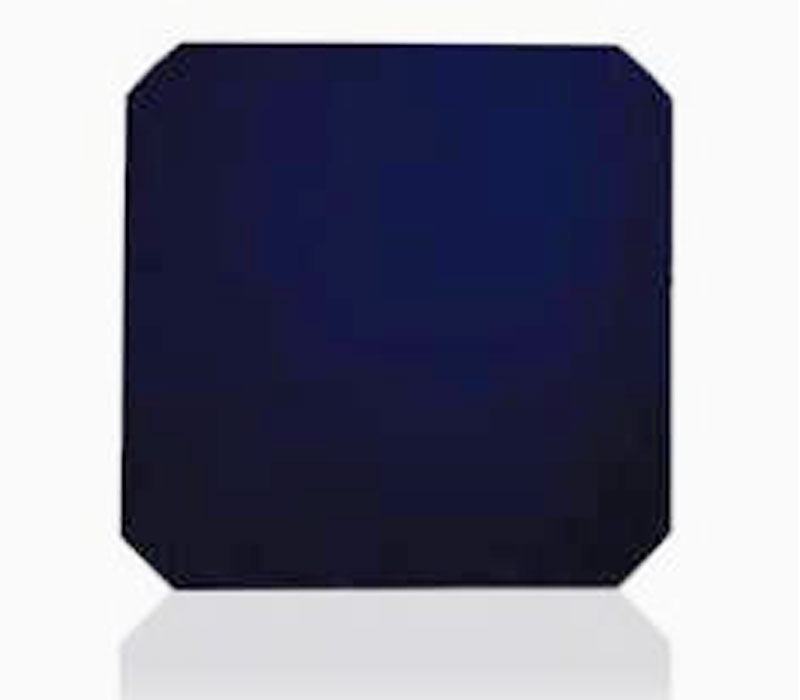
1. where a very thin layer of silicon oxide is deposited on the backside of an N-type wafer, followed by a layer of heavily doped polysilicon film to achieve tunnel passivation on the backside to increase the open-circuit voltage currently mass-produced.
2. Solar cell efficiency of more than 24%, double-sided rate relative PERT
3.PERC production line is slightly lower, the future can be upgraded to TOPCON
Heterojunction Solar Cells
Heterojunction on N-type silicon substrate with amorphous silicon as passivation layer; heterojunction allows for higher open-circuit voltages with additional transparent conductive layers.
Requires low-temperature silver paste, 200°C, and allows thinner N-type wafers to reduce costs.Mass-produced solar cell efficiency is about 24%, and high open-circuit voltage allows for low power temperature coefficient values of about 0.28%/°C and double-sidedness of 90% or more.
High equipment and material costs, difficult engineering
N Heterojunction Advantages Simple manufacturing process, highest power conversion rate Huge potential for efficiency improvement, process suitable for thin wafer (100-160um) production Significant reduction in the cost of silicon-based materials, basically no power degradation High double-sided rate. Disadvantages are large initial equipment investment and technical difficulties, but with the advancement of technology and equipment development, the cost will be equal to or even lower than the Perc process, and the market has great potential for development.
N-Type IBC Solar Cells.
Differential finger-like back contact solar cell wafer with no grid shadow on the front side to increase current.
Can be combined with a heterojunction having an amorphous silicon passivation layer or a tunnel passivation layer to form a solar cell wafer with an HBC structure.Complex solar cell structures lead to complex and costly production processes.PERC solar cell wafer efficiency potential analysis.Perc process is the mainstream of the current market, the advantage is that the technology is mature, low cost, the disadvantage is that the efficiency conversion rate and then improve the difficulty of power attenuation (made into components after the first year less than 3%, followed by 0.5% per year), 1 year PERC solar cell sheet mass production efficiency is expected to increase to 23.5%.
Theoretically, PERC solar line efficiency is expected to increase to 24%, but the efficiency of 23.5% after further upgrading of the technical difficulties and cost challenges increased significantly.