


Best Solar System for Home Use in 2026: Complete Buyer’s Guide
Discover the best solar system for home use in 2026. Compare on-grid, off-grid, and hybrid systems to find the most efficient and cost-effective solution.
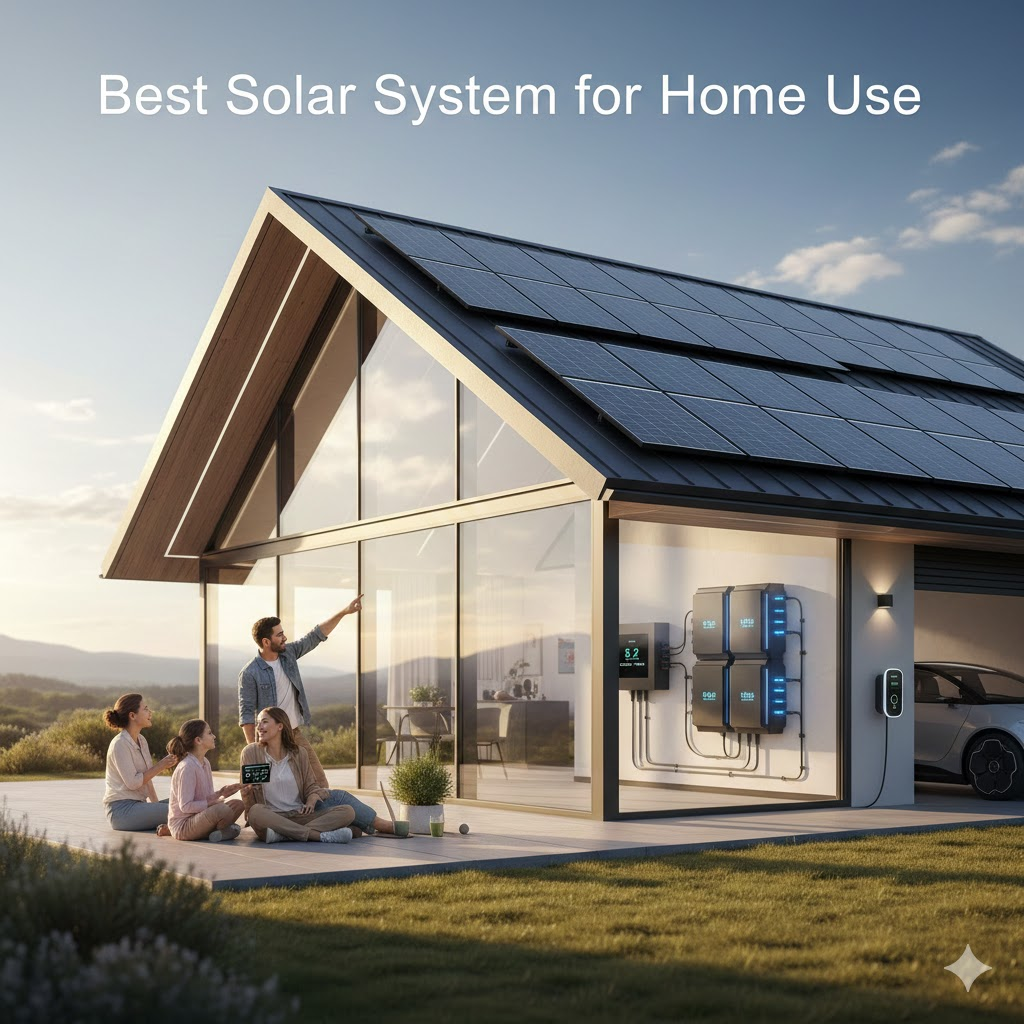
Best Solar System for Home Use
Choosing the best solar system for home use depends on more than just panel wattage. Homeowners in 2026 are looking for systems that are efficient, reliable, cost-effective, and future-ready.
In this guide, we’ll help you compare different home solar systems, explain which option works best for different households, and show how to make a smart long-term investment.
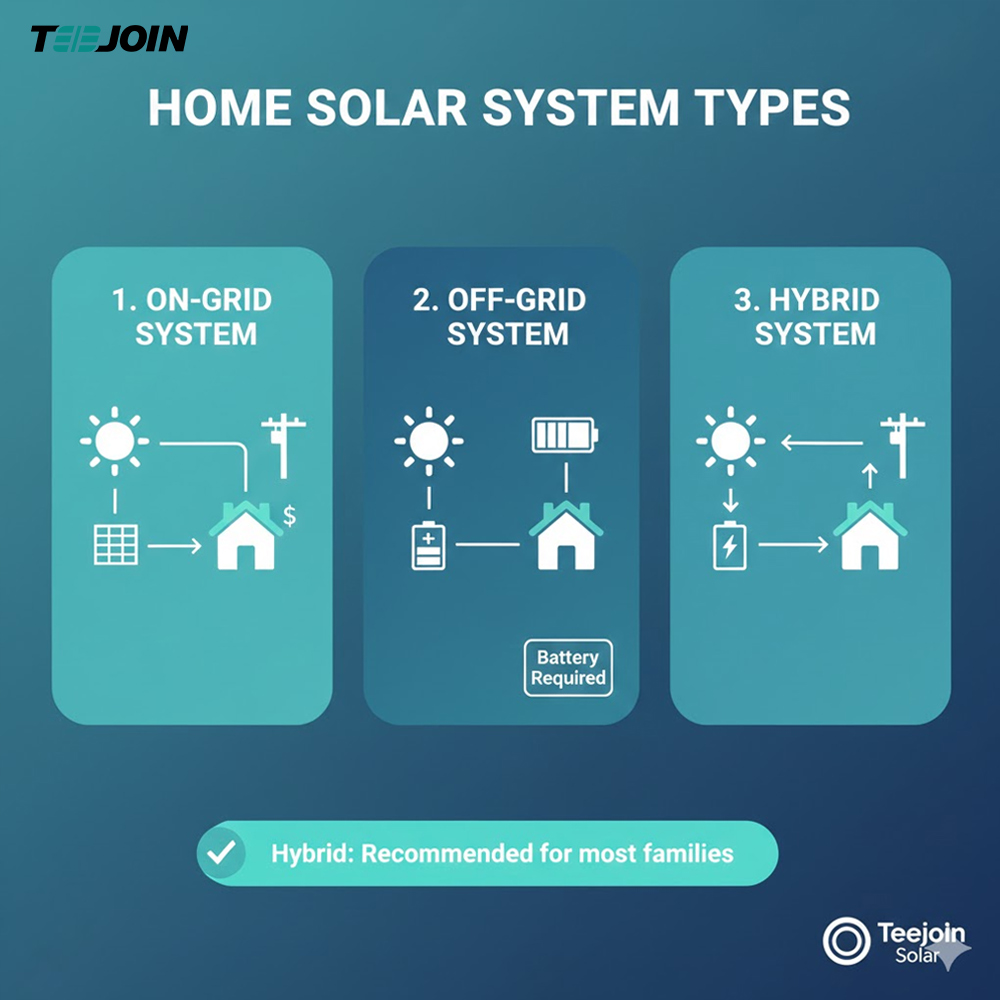
Types of Solar Systems for Home Use
There are three main types of residential solar systems:
1. On-Grid Solar System (Grid-Tied)
Best for: Urban homes with stable grid electricity
Advantages:
Lowest upfront cost
No battery required
High efficiency
Can sell excess power to the grid
Limitations:
No backup power during grid outages
Typical System Size: 3–10 kW
2. Off-Grid Solar System
Best for: Remote areas, rural homes, or places with no grid access
Advantages:
Complete energy independence
Works without utility power
Ideal for cabins and farms
Limitations:
Higher cost due to batteries
Requires careful energy planning
Typical System Size: 5–15 kW
3. Hybrid Solar System
Best for: Homes needing backup power and grid flexibility
Advantages:
Works with or without grid power
Battery backup during outages
Can store excess solar energy
Future-ready and scalable
Limitations:
Higher upfront cost than on-grid systems
Typical System Size: 5–12 kW
Best Solar System for Most Homes in 2025
For the majority of homeowners, a hybrid solar system is the best choice in 2025.
Why Hybrid Systems Are Ideal:
Increasing grid instability in many regions
Falling battery prices
Rising electricity costs
Greater energy security
A 5kW–8kW hybrid system with lithium battery storage offers the best balance of cost, performance, and reliability.
Recommended Solar Panel Type for Homes
Monocrystalline Solar Panels
Higher efficiency (21–23%)
Better performance in limited roof space
Longer lifespan
Lower degradation rate
Monocrystalline panels are widely considered the best solar panels for residential use.
How to Choose the Right System Size
Your ideal system size depends on:
Monthly electricity consumption (kWh)
Roof space and orientation
Local sunlight hours
Future needs (EV charging, appliances)
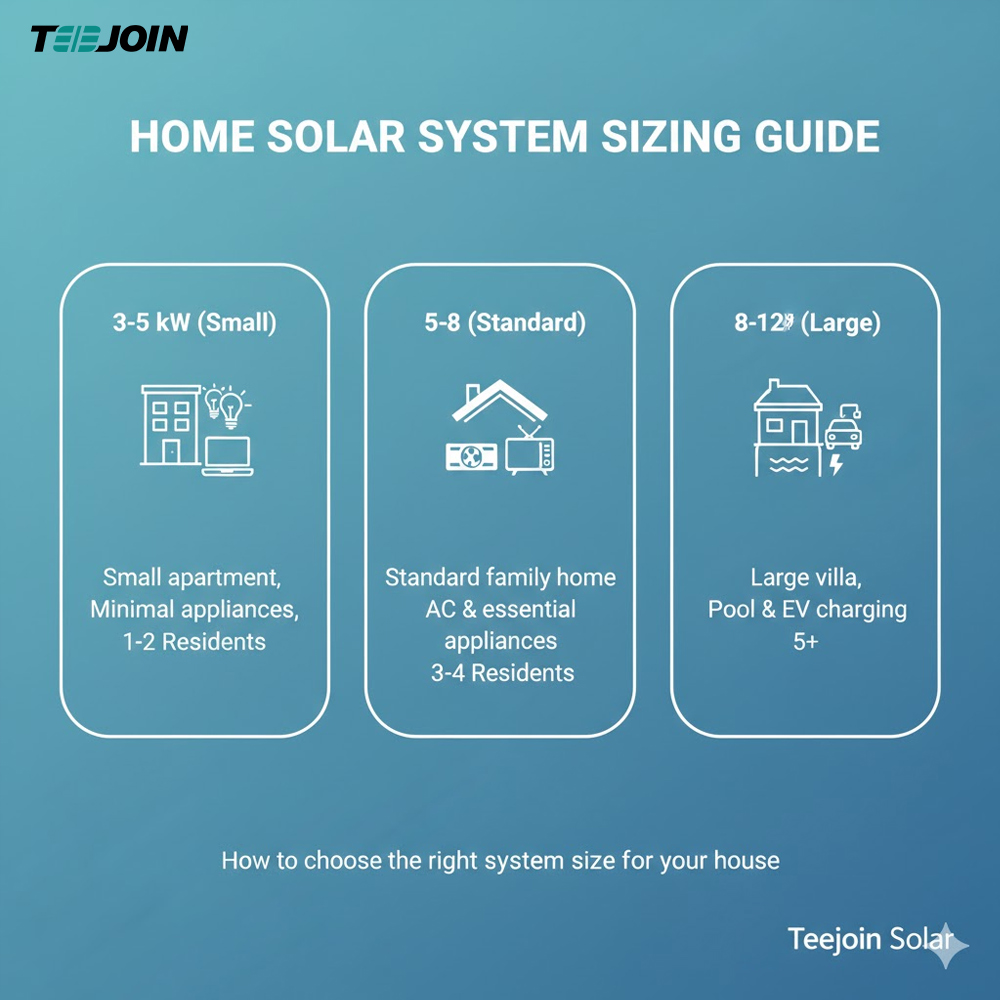
General Home System Sizing Guide
| Household Usage | Recommended System |
|---|---|
| Low (300–400 kWh/month) | 3–5 kW |
| Medium (500–800 kWh/month) | 5–8 kW |
| High (900+ kWh/month) | 8–12 kW |
Cost of Home Solar Systems in 2025
Average Prices
On-grid system: $3,000 – $6,000
Hybrid system: $6,000 – $10,000
Off-grid system: $8,000 – $15,000
Actual costs depend on region, incentives, and component quality.
How Long Does It Take to Pay Back?
Most residential solar systems achieve payback within:
3–5 years in high electricity cost regions
5–7 years in moderate electricity cost regions
After payback, homeowners enjoy 20+ years of low-cost or free electricity.
Common Mistakes to Avoid When Choosing a Home Solar System
Choosing the cheapest panels without quality verification
Ignoring future energy needs
Underestimating battery capacity
Working with inexperienced installers
A well-designed system matters more than just hardware.
Why Buy a Complete Home Solar System from a Manufacturer?
Working directly with a solar system manufacturer offers:
Better price control
OEM / ODM customization
System design support
Consistent component compatibility
Long-term warranty assurance
This approach reduces risk and ensures system reliability.
Conclusion
So, what is the best solar system for home use in 2025?
For most households, a hybrid solar system with high-efficiency monocrystalline panels delivers the best combination of savings, reliability, and future flexibility.
With the right system design, home solar power becomes a smart and sustainable investment.