


Home Solar System Buying Guide : How to Choose the Right System
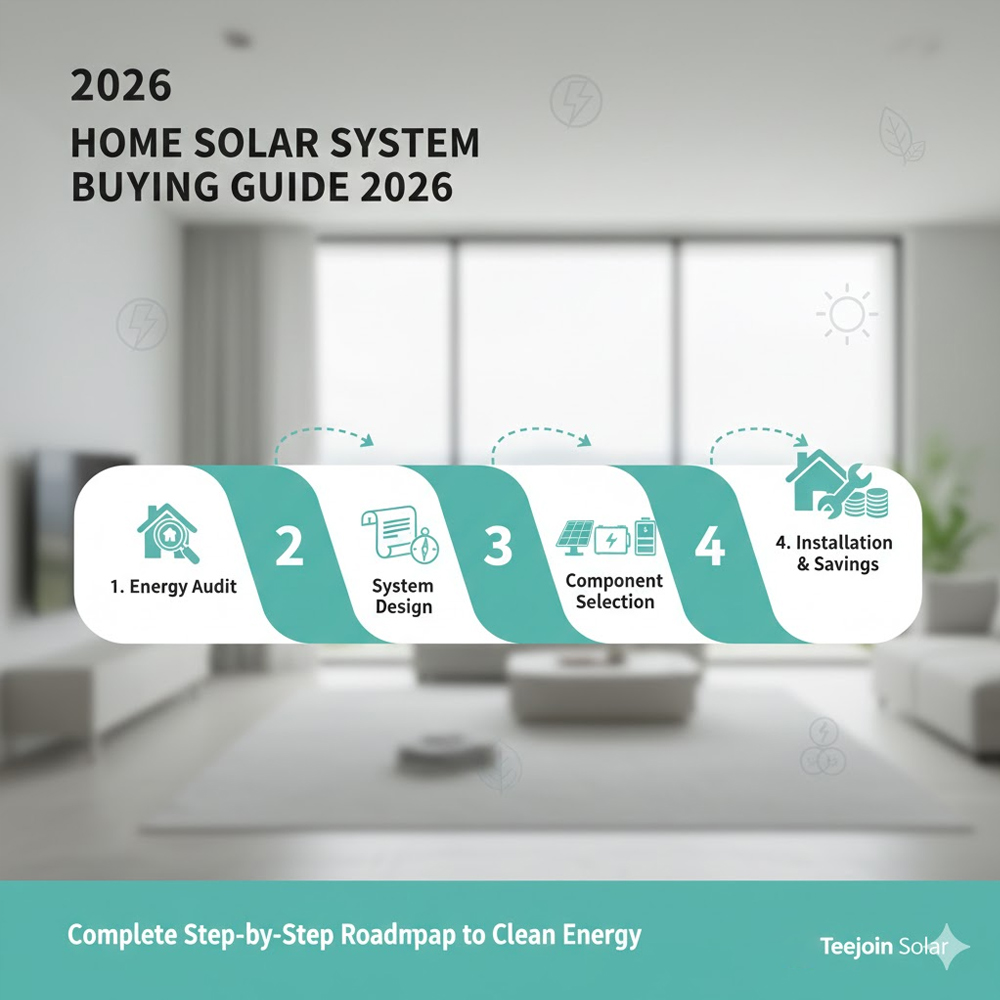
Home Solar System Buying Guide
Buying a home solar system is a long-term investment that can reduce electricity bills for decades. However, choosing the wrong system can lead to poor performance, unnecessary costs, or future upgrade limitations.
This home solar system buying guide walks you through every key decision—so you can confidently choose the right system for your home in 2025 and beyond.
Step 1: Understand Your Electricity Usage
Start by reviewing your monthly electricity consumption (kWh).
Low usage: 300–400 kWh/month
Medium usage: 500–800 kWh/month
High usage: 900+ kWh/month
Your energy usage determines system size, inverter capacity, and battery requirements.
Step 2: Choose the Right Type of Solar System
On-Grid System
Best for homes with reliable grid access and no backup power needs.
Off-Grid System
Ideal for remote locations or homes without utility access.
Hybrid System
Best overall choice for modern homes—combines grid power, solar, and battery backup.
Most homeowners in 2025 choose hybrid systems for flexibility and energy security.
Step 3: Select the Best Solar Panels for Your Home
Key factors to evaluate:
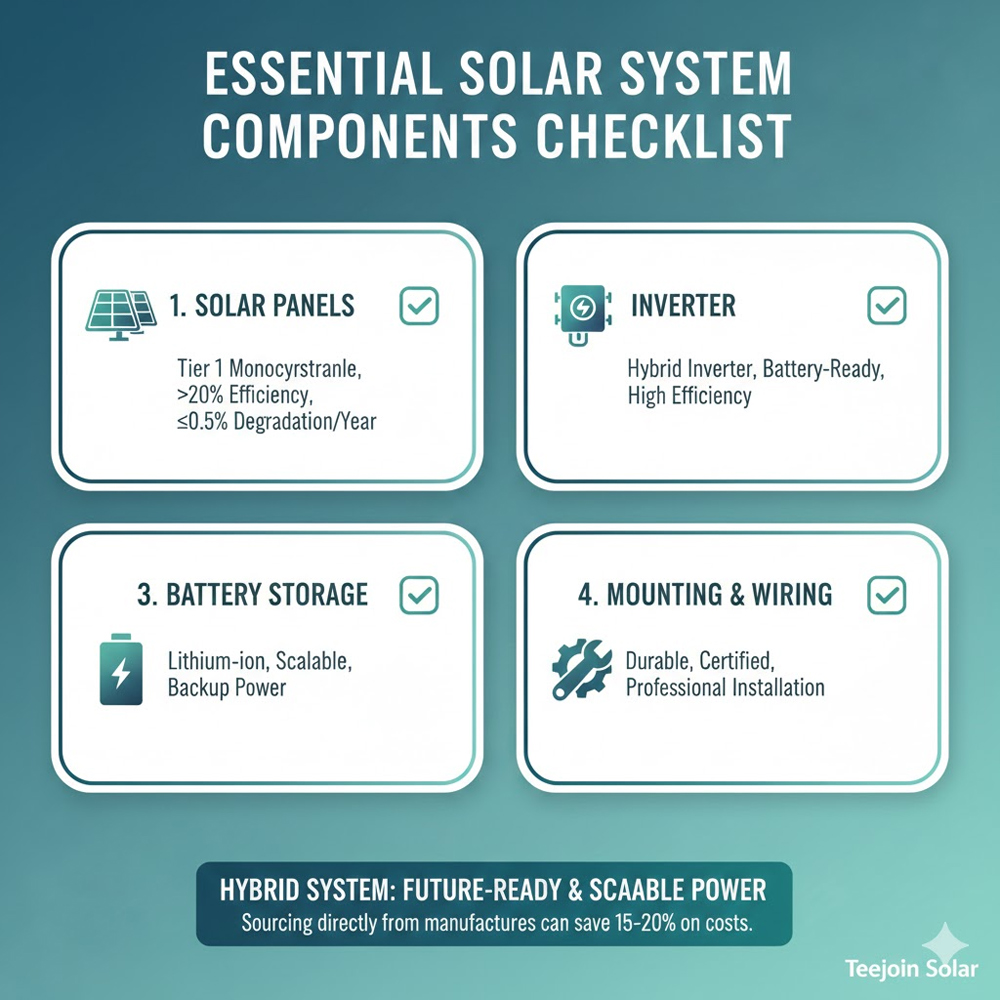
Panel type: Monocrystalline preferred
Efficiency: 20%+ recommended
Degradation rate: ≤0.5% per year
Certifications: IEC, TÜV, UL
High-quality panels may cost more upfront but deliver higher lifetime energy output.
Step 4: Choose the Right Inverter
The inverter converts DC power into usable AC electricity.
Inverter Options:
String inverter (cost-effective)
Hybrid inverter (battery-ready)
Microinverter (highest performance, higher cost)
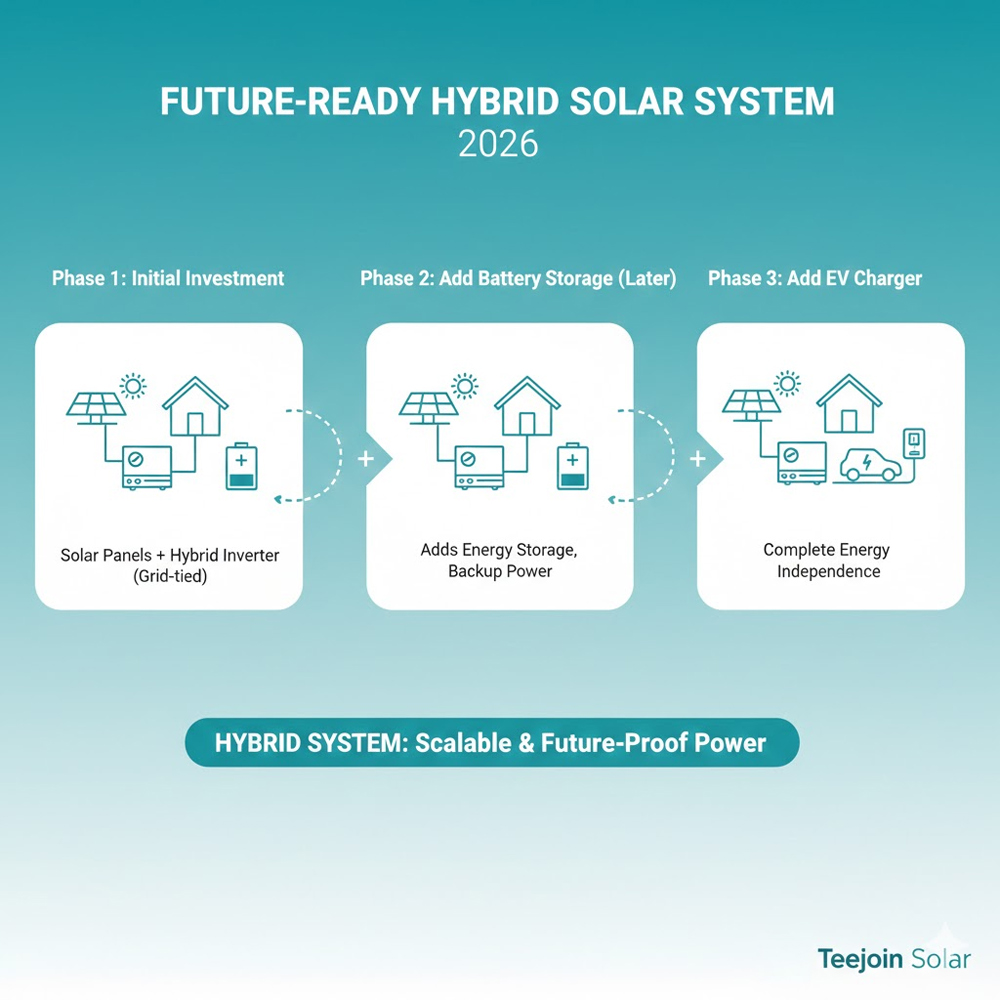
For future upgrades, a hybrid inverter is the smartest choice.
Step 5: Decide If You Need Battery Storage
Batteries are optional but increasingly popular.
When Batteries Make Sense:
Frequent power outages
High evening electricity usage
Desire for energy independence
Lithium battery systems offer longer lifespan, faster charging, and higher efficiency.
Step 6: Determine the Correct System Size
| Monthly Usage | Recommended System |
|---|---|
| 300–400 kWh | 3–5 kW |
| 500–800 kWh | 5–8 kW |
| 900+ kWh | 8–12 kW |
Oversizing increases cost, while undersizing limits savings—proper design is critical.
Step 7: Understand Total Cost & Payback
Typical Home Solar Costs (2025)
On-grid: $3,000 – $6,000
Hybrid: $6,000 – $10,000
Off-grid: $8,000 – $15,000
Average Payback Period
3–5 years in high electricity cost regions
5–7 years in moderate regions
Step 8: Check Warranty & Certifications
A reliable home solar system should include:
Panel performance warranty: 25–30 years
Inverter warranty: 5–10 years
Battery warranty: 5–15 years
Always confirm manufacturer certifications and compliance.
Step 9: Choose a Reliable Solar Supplier
When selecting a supplier, look for:
Proven manufacturing experience
System design support
Global project references
OEM / ODM customization options
Long-term after-sales service
Working directly with a manufacturer reduces cost and risk.
Common Home Solar Buying Mistakes
Focusing only on price
Ignoring system compatibility
Underestimating battery needs
Choosing installers without experience
A properly designed system delivers better performance than mismatched components.
Conclusion
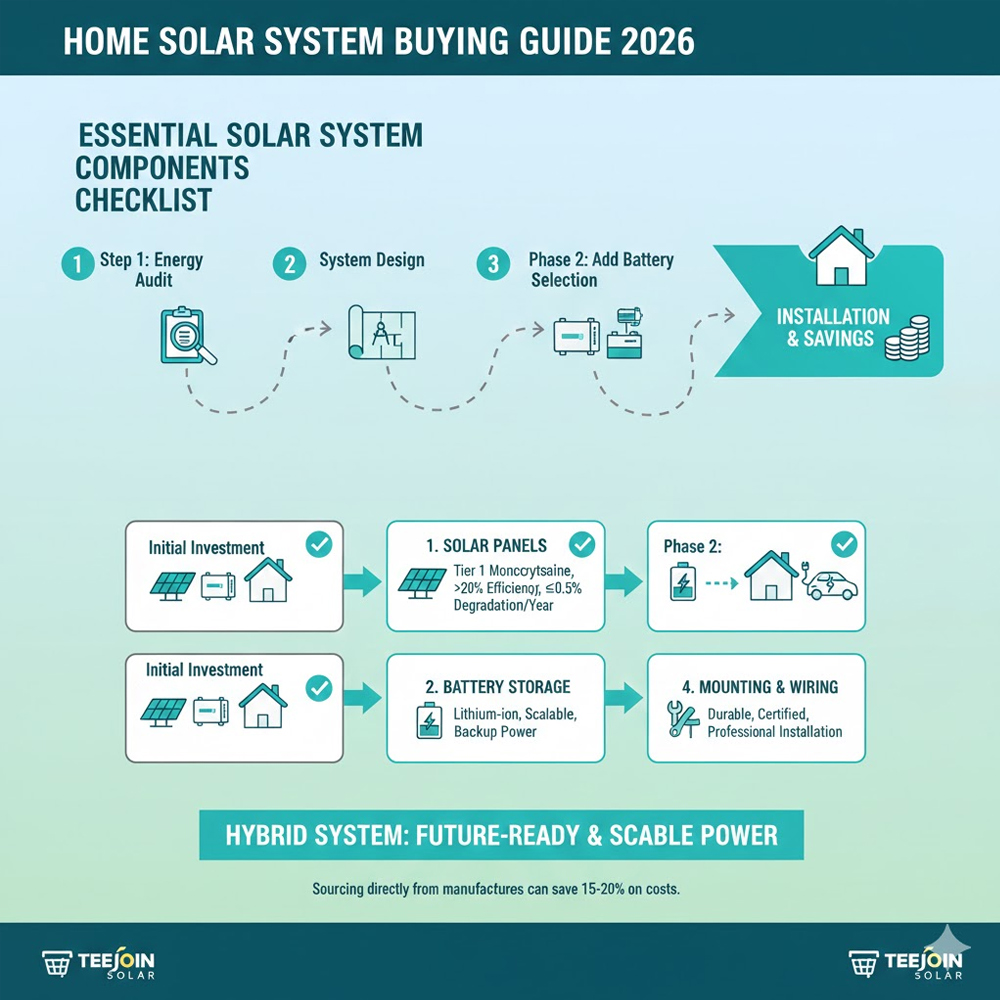
Buying a home solar system doesn’t have to be complicated. By understanding your energy needs, choosing quality components, and working with a reliable supplier, you can enjoy clean, affordable energy for decades.
This home solar system buying guide helps ensure your investment is efficient, reliable, and future-proof.