


Future of Solar Energy Industry | Global Solar Market Growth Trends
The solar industry is rapidly transforming the global energy landscape. As countries focus on sustainability and carbon reduction, the future of solar energy looks brighter than ever. Over the past decade, the solar energy market has experienced remarkable expansion, driven by technological innovation, falling production costs, and increasing renewable energy investment worldwide.
Today, solar power is no longer a niche technology. It has become a key pillar of the renewable energy industry, supporting the global renewable energy transition toward cleaner and more sustainable electricity generation.
Rapid Growth of the Global Solar Industry
The solar industry has become one of the fastest-growing sectors in the global energy economy. According to recent reports, the global solar capacity continues to increase each year as governments and private investors expand solar installations.
This growth is largely driven by several important factors:
Increasing solar market growth in emerging economies
Government incentives supporting renewable energy projects
Rapid solar technology innovation improving efficiency and reliability
Rising demand for clean solar power generation
As solar technologies improve, the cost of electricity from solar power plants continues to decline, making solar energy more competitive with fossil fuels.

Utility Scale Solar Driving Industry Expansion
One of the most important solar industry trends is the rapid development of utility scale solar projects around the world.
A large solar farm can generate hundreds of megawatts of electricity, providing clean energy for cities, industries, and national power grids. These solar power plants are typically built in regions with strong sunlight and available land, such as deserts or rural areas.
Compared with traditional power stations, utility scale solar projects offer many advantages:
Lower operational costs
Long system lifetimes exceeding 25 years
Zero carbon emissions during operation
Scalable design suitable for expanding energy demand
As global electricity demand rises, the development of solar power plants and large solar farms is expected to accelerate the expansion of the solar energy market.

Solar Technology Innovation Improving Efficiency
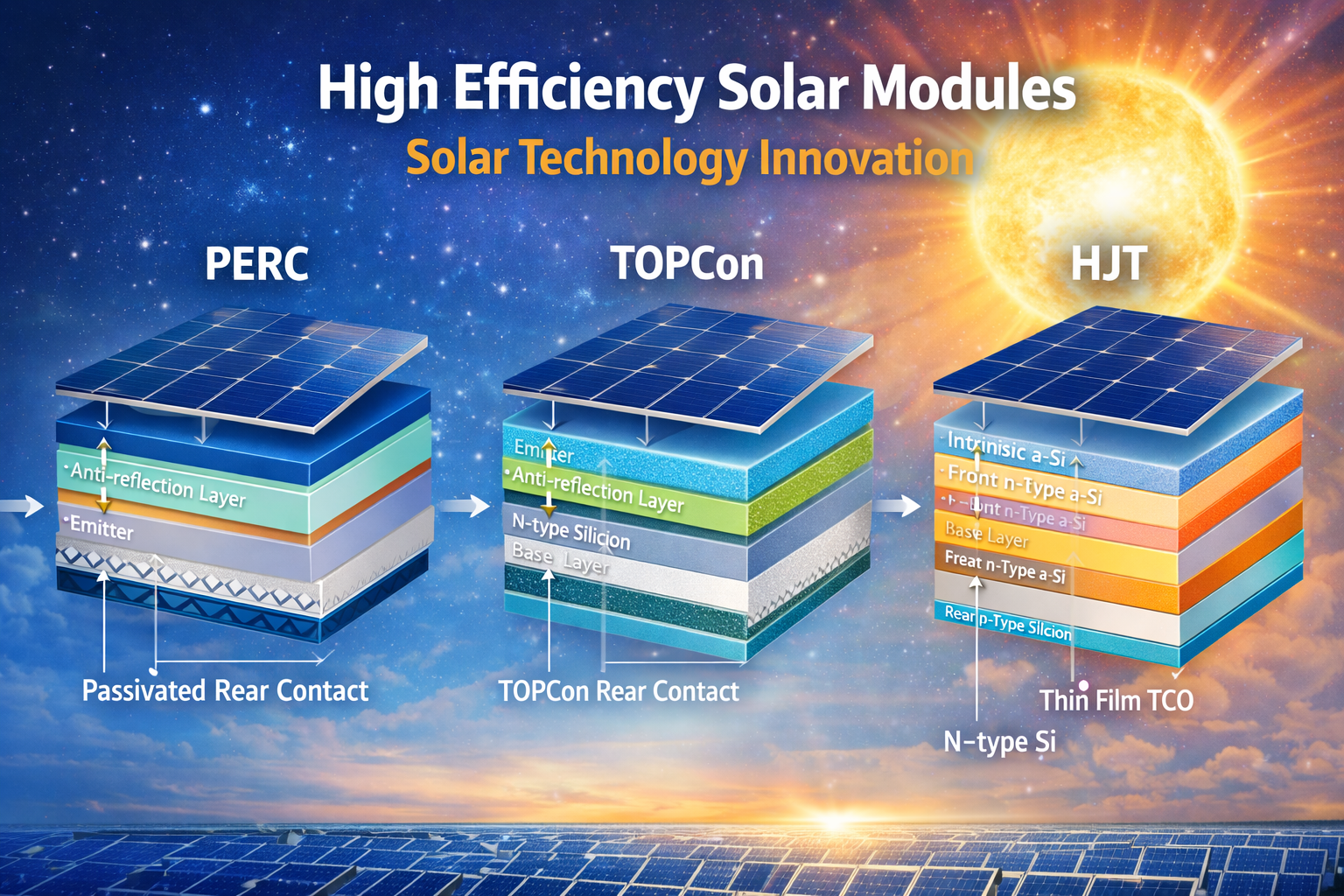
Another key factor shaping the future of solar energy is continuous solar technology innovation. Advances in solar cell design and manufacturing have significantly improved panel performance.
Modern high efficiency solar modules can now achieve conversion efficiencies exceeding 22%, allowing solar systems to generate more electricity using fewer panels.
Several next-generation technologies are driving this progress:
N-type monocrystalline solar cells
TOPCon solar technology
HJT solar cell architecture
Advanced anti-reflection coatings
These innovations not only increase solar power generation, but also reduce installation costs, making solar energy more accessible for both residential and commercial applications.
Renewable Energy Investment Accelerating Solar Market Growth
Global renewable energy investment has surged in recent years as governments seek to reduce carbon emissions and enhance energy security.
Major economies including the United States, the European Union, China, and Japan are investing heavily in solar infrastructure and new solar power plants.
Policy measures such as:
Tax incentives
Renewable energy subsidies
Net metering programs
Carbon neutrality targets
are accelerating solar market growth and strengthening the role of solar within the renewable energy industry.
As these policies continue to expand, solar energy will become an increasingly important part of the global energy mix.
Solar Power and the Global Renewable Energy Transition
The global renewable energy transition is reshaping the way electricity is generated and distributed worldwide. Solar power is expected to play a dominant role in this transformation.
Experts predict that by 2050, solar could become one of the largest sources of electricity generation globally. With continuous solar technology innovation and expanding global solar capacity, solar energy systems will become even more efficient and affordable.
In combination with energy storage systems and smart grid technologies, solar power will provide reliable and sustainable solar power generation for future generations.
Conclusion
The solar industry is entering a new era of innovation and expansion. Rapid improvements in high efficiency solar modules, growing renewable energy investment, and the construction of massive utility scale solar projects are transforming the solar energy market.
As the world continues its global renewable energy transition, solar energy will remain at the center of the clean energy revolution. Companies and investors who participate in this expanding renewable energy industry will help shape the future of solar energy for decades to come.