


How Solar Energy Becomes Usable Electricity
When people ask “how solar power works in a home solar system?”, the answer always includes one essential device — the solar inverter.
While solar panels capture sunlight and generate electricity, the inverter is the component that makes that electricity usable for homes and businesses.
In this guide, we explain how solar inverters work, the different types available, and why they are critical to any efficient solar system.
What Is a Solar Inverter?
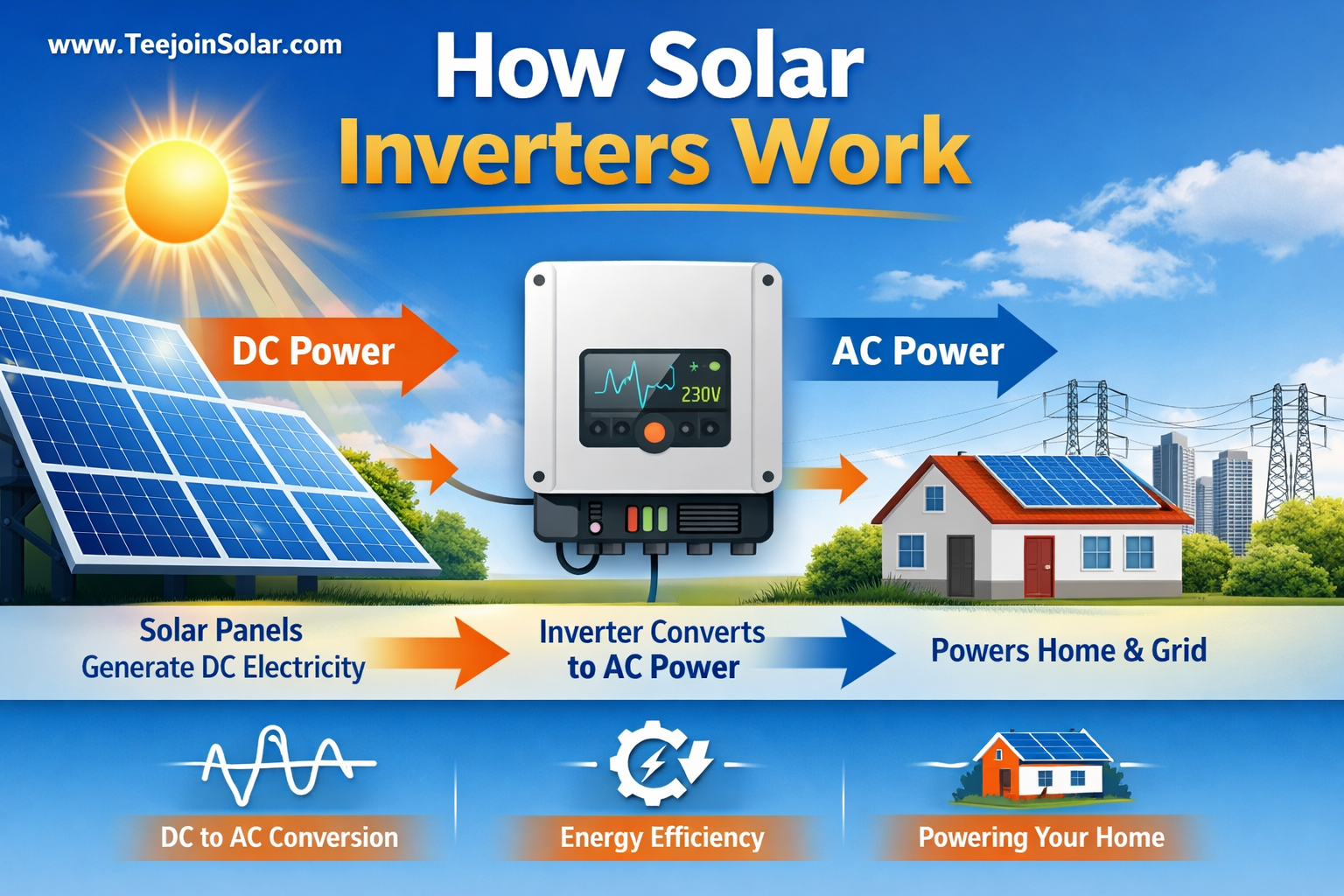
A solar inverter is the “brain” of a photovoltaic (PV) system. Solar panels produce direct current (DC) electricity, but most appliances and power grids operate using alternating current (AC) electricity.
The inverter converts DC into AC, allowing the electricity generated by your solar panels to power homes, commercial buildings, or feed into the utility grid.
Without a solar inverter, solar energy cannot be used effectively.
How Solar Inverters Work Step by Step
1. Solar Panels Generate DC Power
Solar cells inside the panel absorb sunlight and produce DC electricity through the photovoltaic effect.
2. DC Power Flows to the Inverter
The DC electricity travels through wiring to the inverter. At this stage, the power cannot yet operate household appliances.
3. DC to AC Conversion
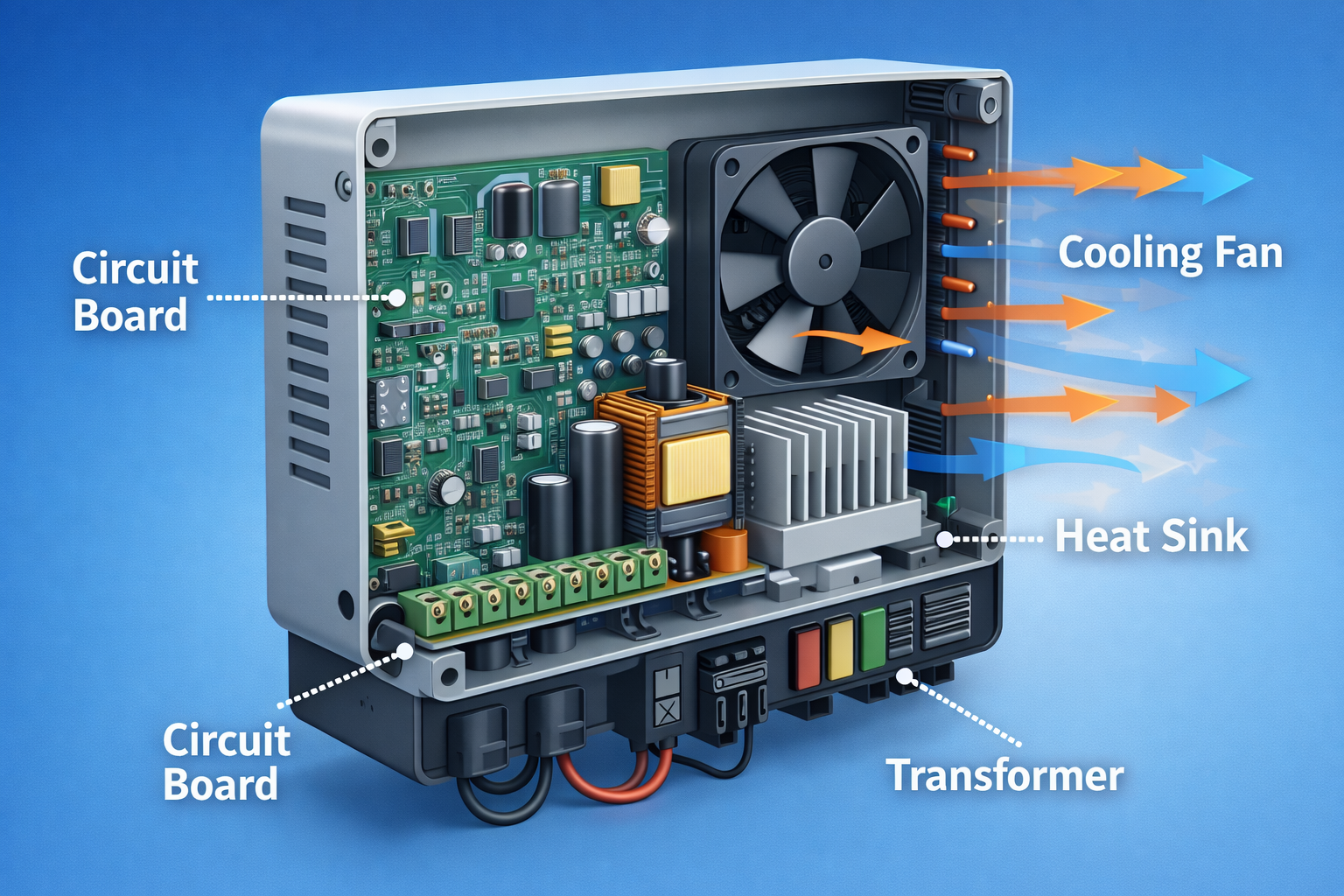
Inside the inverter:
Electronic switches rapidly turn the DC power on and off
The current is reshaped into a sine wave
The output becomes grid-compatible AC electricity
This conversion process allows the solar energy to power:
Lighting systems
Air conditioners
Refrigerators
Industrial equipment
4. Electricity Powers the Home or Grid
After conversion, AC electricity:
Supplies immediate household demand
Charges battery storage (if installed)
Exports excess electricity back to the grid
Types of Solar Inverters
Understanding inverter types helps customers choose the right solar system configuration.
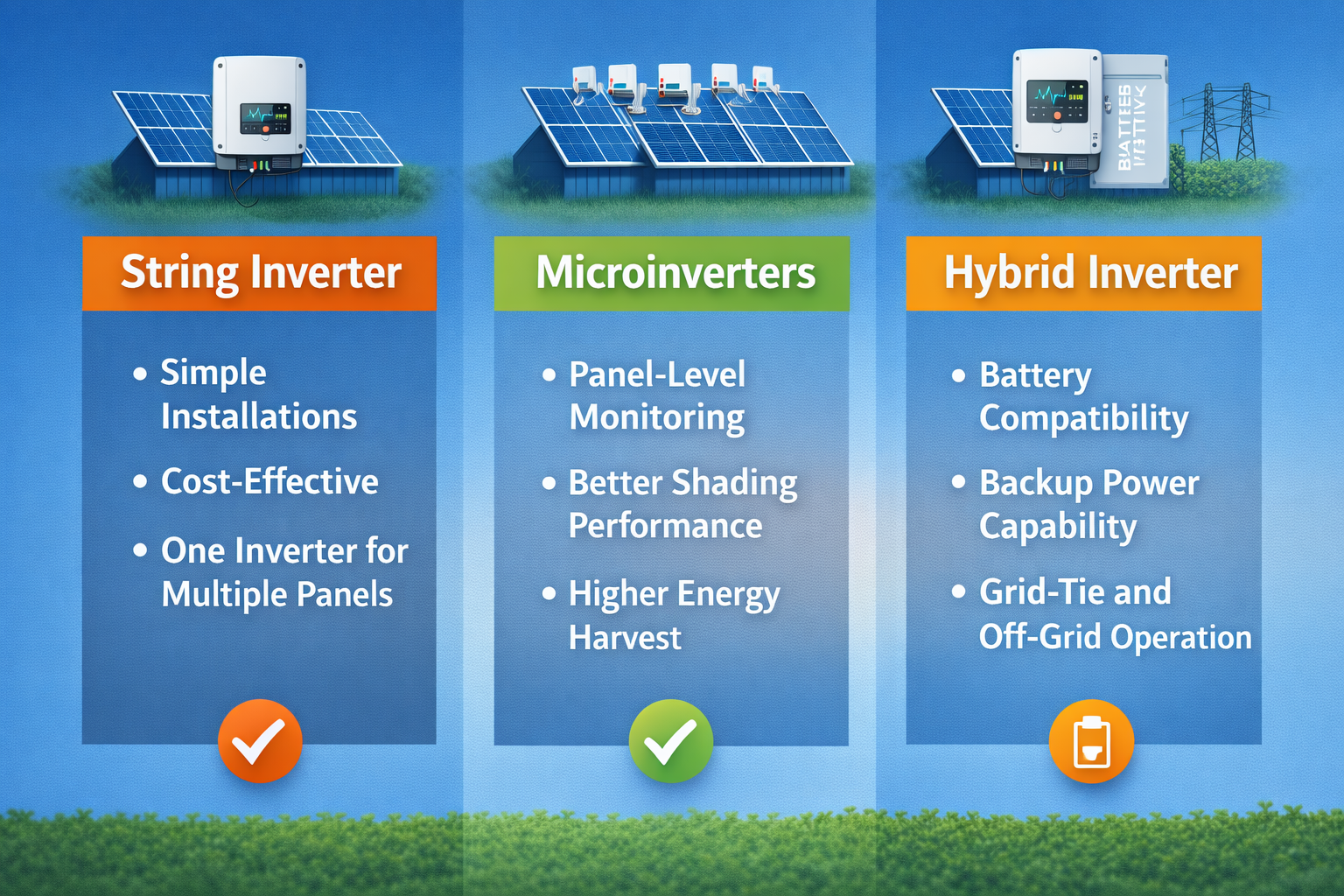
1. String Inverters
Most common and cost-effective option. Multiple panels connect in series to one inverter.
Best for:
Residential rooftops
Simple installations
2. Microinverters
Installed on each individual panel.
Benefits:
Higher energy harvest
Better performance in shaded conditions
Panel-level monitoring
3. Hybrid Inverters
Designed for systems with battery storage.
Advantages:
Supports solar + battery integration
Enables backup power
Ideal for energy independence
Why Solar Inverters Matter for System Efficiency
A high-quality inverter directly affects:
Conversion efficiency (typically 95%–99%)
System lifespan
Safety protection (overload, short circuit)
Monitoring and smart control functions
Choosing a reliable inverter ensures maximum return on investment for your solar installation.
Smart Features in Modern Solar Inverters
Modern solar inverters offer advanced features such as:
WiFi monitoring via mobile app
Real-time energy tracking
Grid-tie protection
Remote diagnostics
Compatibility with lithium battery storage
These features make modern solar systems more intelligent and user-friendly.
How to Choose the Right Solar Inverter
When selecting an inverter, consider:
Total system size (kW capacity)
Grid-tied or off-grid system
Battery storage requirements
Climate conditions
Certification standards (CE, TUV, IEC)
A properly matched inverter ensures optimal performance of your solar panels and entire solar system.
Conclusion: The Heart of Every Solar System
Understanding how solar inverters work helps homeowners and businesses make informed energy decisions.
Solar panels capture sunlight, but it is the inverter that transforms that energy into usable electricity.
Whether for residential rooftops, commercial projects, or industrial-scale installations, choosing the right inverter ensures efficiency, safety, and long-term energy savings.