


Solar Panel Price Trends in 2026 | Solar Industry Market Analysis
Introduction
The solar industry continues to evolve rapidly as global demand for renewable energy accelerates. In 2026, solar panel price trends are influenced by multiple factors, including manufacturing technology, raw material costs, government incentives, and large-scale solar project investments.
For businesses, developers, and energy investors, understanding solar panel price trends in 2026 is essential when planning new solar installations or expanding renewable energy portfolios.
This article explores the latest solar industry developments, the factors affecting module prices, and what buyers and installers can expect in the global solar market.
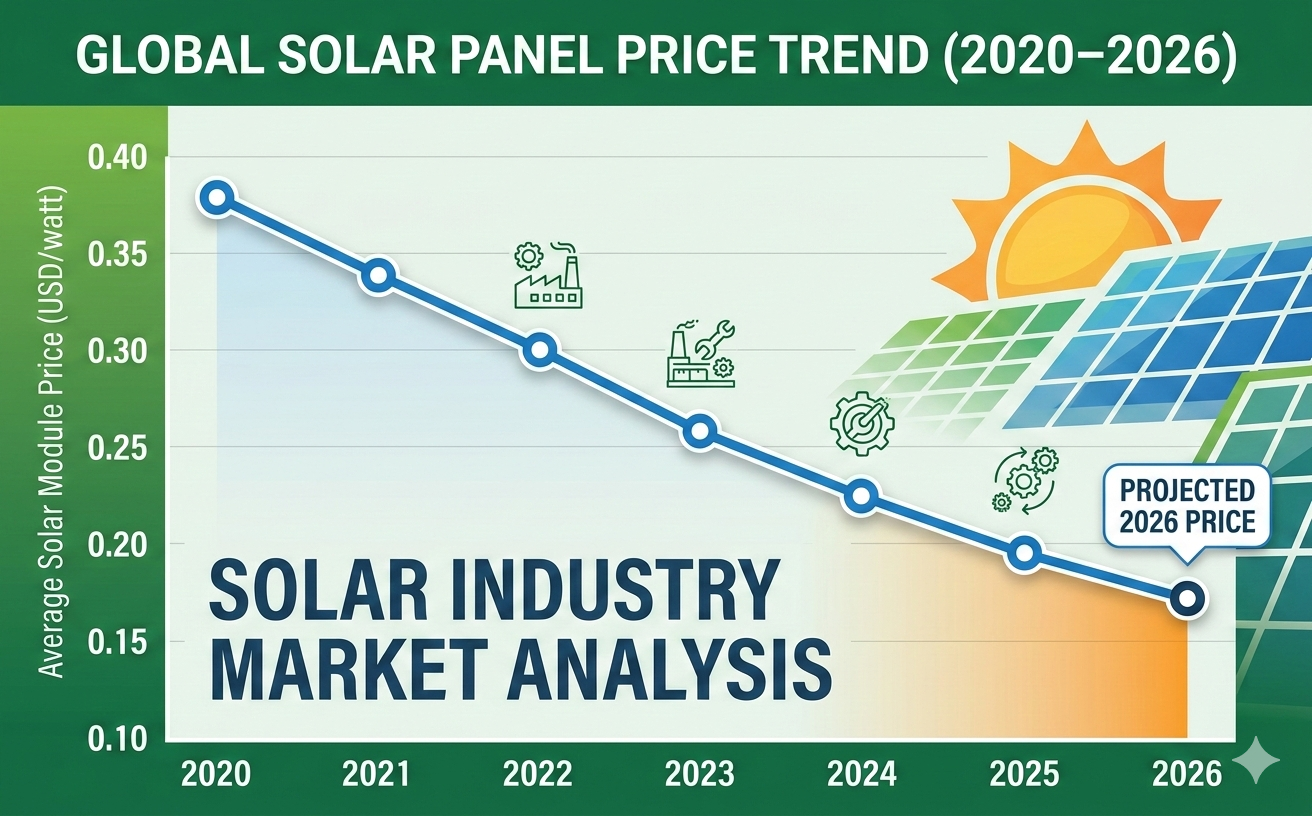
Image suggestion: Line chart showing declining solar module prices from 2020–2026.
Global Solar Panel Prices Continue to Decline
Over the past decade, the solar industry has experienced a steady decline in solar panel costs due to technological advancements and large-scale manufacturing.
In 2026, global solar module prices remain competitive as manufacturers continue to scale production and improve efficiency.
Key market observations include:
Average solar panel prices are significantly lower than five years ago
Mass production of high-efficiency solar modules has reduced manufacturing costs
Increased competition among global solar manufacturers
Expansion of utility-scale solar power plants
These developments help make solar energy more affordable for both residential and commercial projects.
Key Factors Affecting Solar Panel Prices in 2026
Several critical factors are shaping solar panel price trends in the global solar industry.
1. Solar Cell Technology Advancements
New technologies such as TOPCon solar cells, N-type modules, and heterojunction solar panels are improving conversion efficiency while reducing production costs.
Higher efficiency means fewer panels are required to produce the same amount of electricity, which reduces system installation costs.
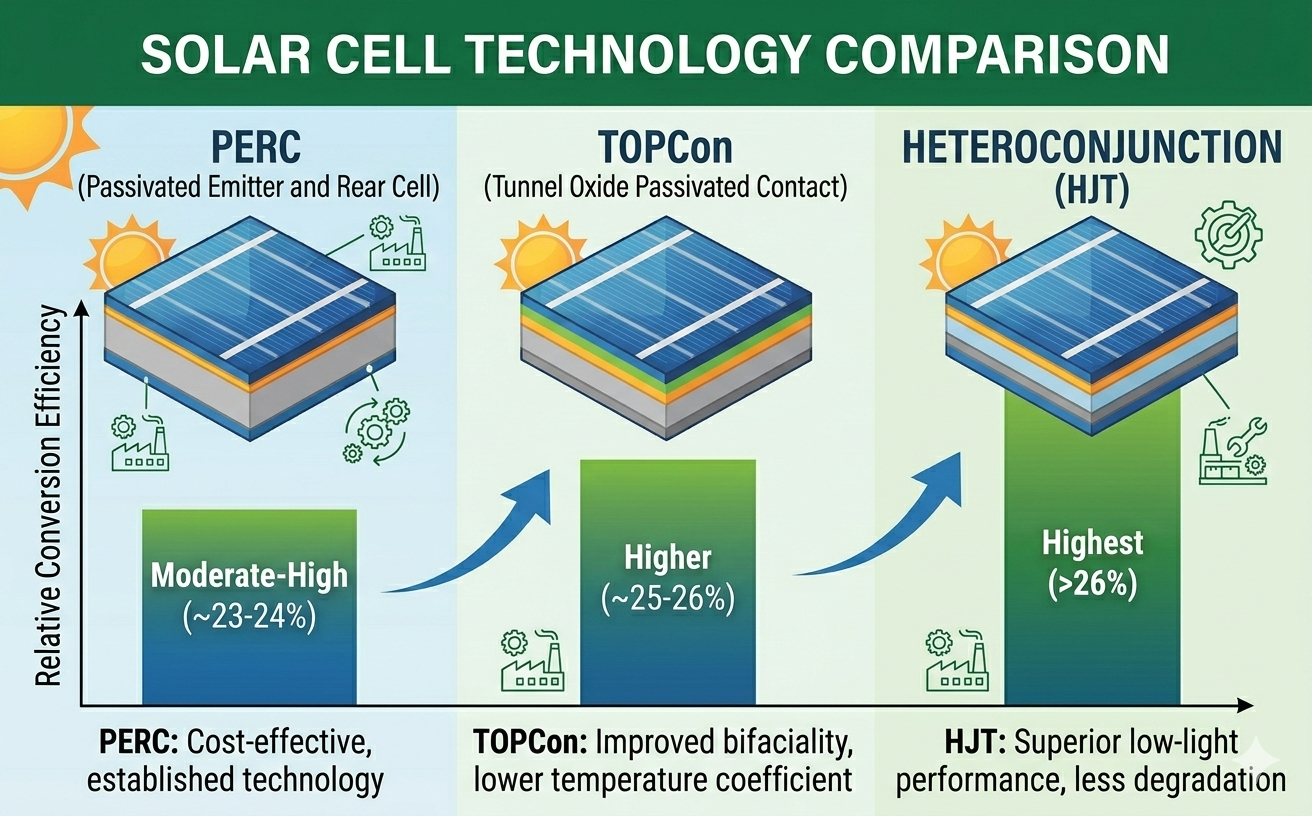
Image suggestion: Diagram comparing different solar cell technologies.
2. Raw Material Price Fluctuations
The price of key raw materials such as:
Polysilicon
Silver paste
Aluminum frames
Solar glass
directly affects solar module manufacturing costs. In 2026, stabilized polysilicon supply has helped maintain relatively stable solar panel pricing.
3. Growth of Utility-Scale Solar Projects
Large utility-scale solar farms continue to drive demand across the solar industry. Governments and private investors are accelerating renewable energy projects to meet carbon reduction targets.
The rapid deployment of large solar power plants encourages manufacturers to produce modules at higher volumes, helping reduce overall prices.
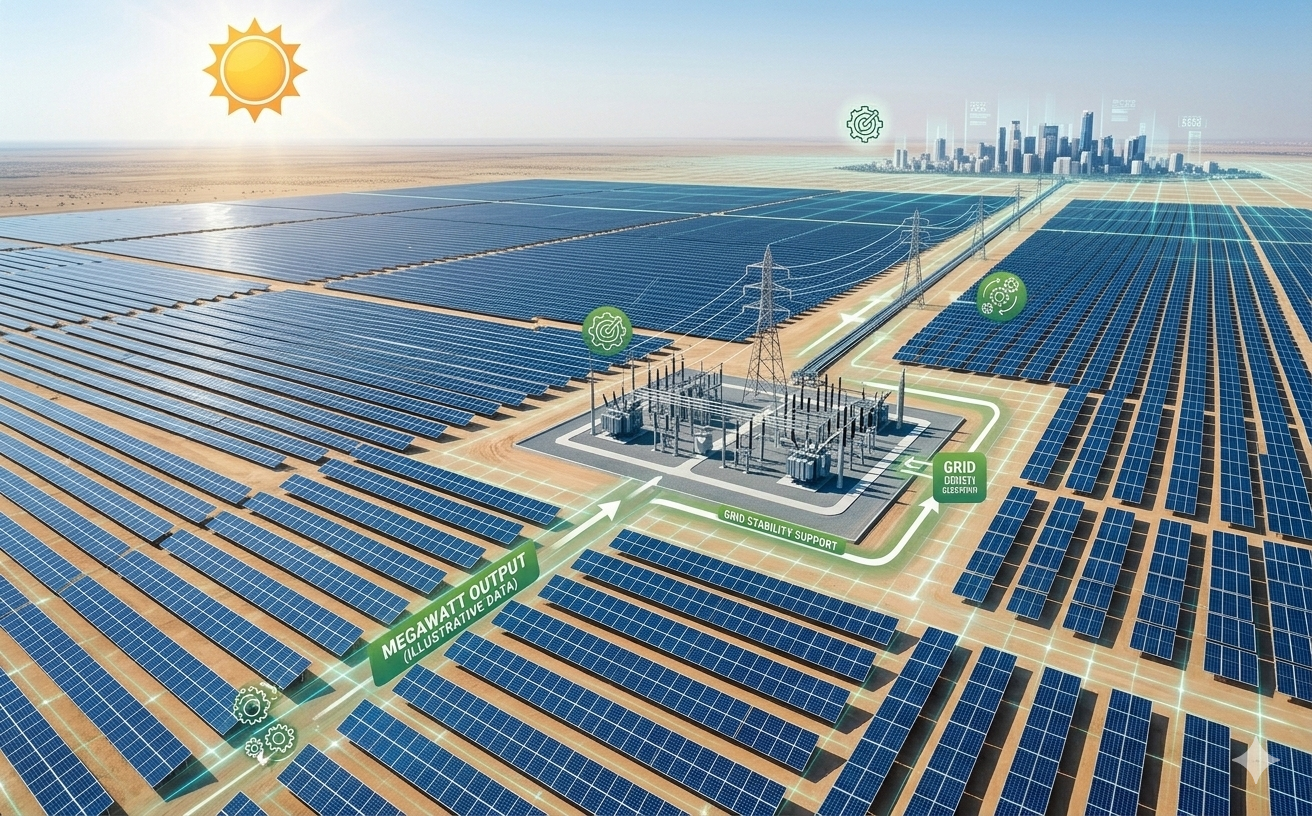
Image suggestion: Aerial image of a massive solar power plant connected to grid infrastructure.
Regional Solar Panel Price Differences
Solar panel prices vary across regions due to logistics, import tariffs, and local solar policies.
Typical market characteristics include:
United States
Higher module prices due to tariffs and local manufacturing policies
Strong demand for domestic solar products
Europe
Rapid expansion of solar energy installations
High demand for premium high-efficiency modules
Asia-Pacific
Largest manufacturing hub for solar modules
Competitive pricing and large production capacity
These regional differences continue to shape the global solar energy market.
Solar Industry Outlook for the Next Few Years
Looking beyond 2026, analysts expect the solar industry to continue expanding rapidly as renewable energy adoption increases worldwide.
Major trends likely to influence solar panel prices include:
Further improvements in solar module efficiency
Expansion of solar power generation capacity
Increased renewable energy investment
Growth of energy storage and hybrid solar systems
As production scales further, solar energy is expected to remain one of the most cost-effective renewable power sources globally.
Conclusion
The solar panel price trends in 2026 reflect a dynamic and rapidly growing solar industry. Advances in solar technology, improved manufacturing efficiency, and large-scale renewable energy investments continue to drive costs down.
For businesses and project developers, understanding these trends can help optimize procurement strategies and plan future solar installations more effectively.
With global demand rising, the solar industry will remain a key driver of the transition toward sustainable and clean energy.