


What Is a Flexible Solar Panel?
When people search “what solar solutions are best for mobile or lightweight applications”, flexible solar panels are often one of the top recommendations.
But what exactly is a flexible solar panel? How is it different from traditional rigid solar panels? And where is it best used in a solar system?
This guide explains everything in simple terms for homeowners, RV users, boat owners, and commercial buyers.
What Solar Technology Makes a Panel Flexible?
A flexible solar panel is a lightweight photovoltaic module made using thin-film or ultra-thin monocrystalline solar cells. Unlike traditional glass-based solar panels, flexible panels use polymer back sheets and protective coatings instead of heavy aluminum frames and tempered glass.
This allows the panel to:
Bend slightly (usually up to 30 degrees)
Weigh 70% less than rigid panels
Be installed on curved surfaces
Reduce transportation cost
Most modern flexible panels use high-efficiency monocrystalline cells similar to those used in standard rooftop solar panels.
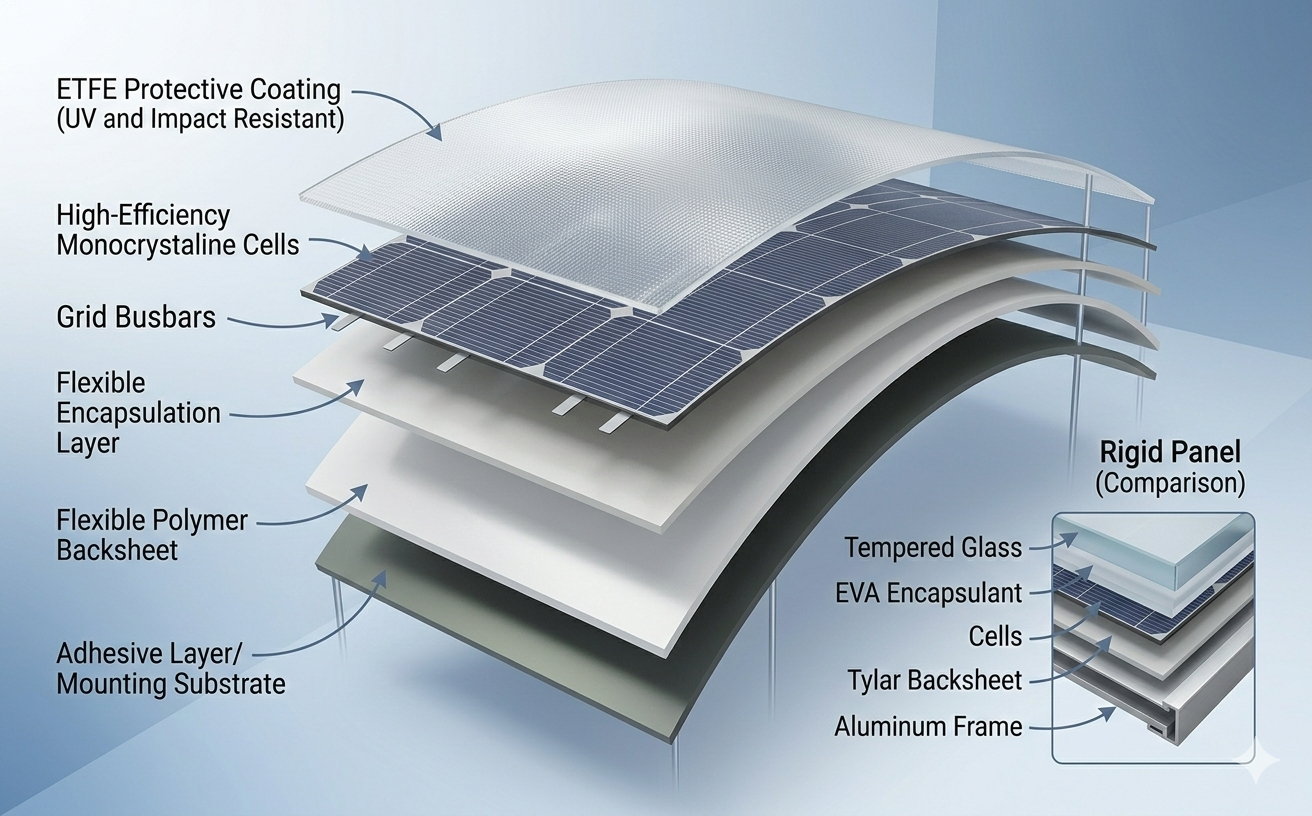
Flexible Solar Panels vs Traditional Solar Panels
Understanding the difference helps buyers choose the right solar system.
| Feature | Flexible Solar Panels | Traditional Solar Panels |
|---|---|---|
| Weight | Very lightweight | Heavy (glass + aluminum frame) |
| Installation | Easy, adhesive or screws | Mounting brackets required |
| Surface Type | Flat or curved | Flat only |
| Durability | Good, but less impact resistant | Very durable |
| Efficiency | 18–23% | 20–23% |
For mobile applications, flexible solar panels are often the smarter solution.
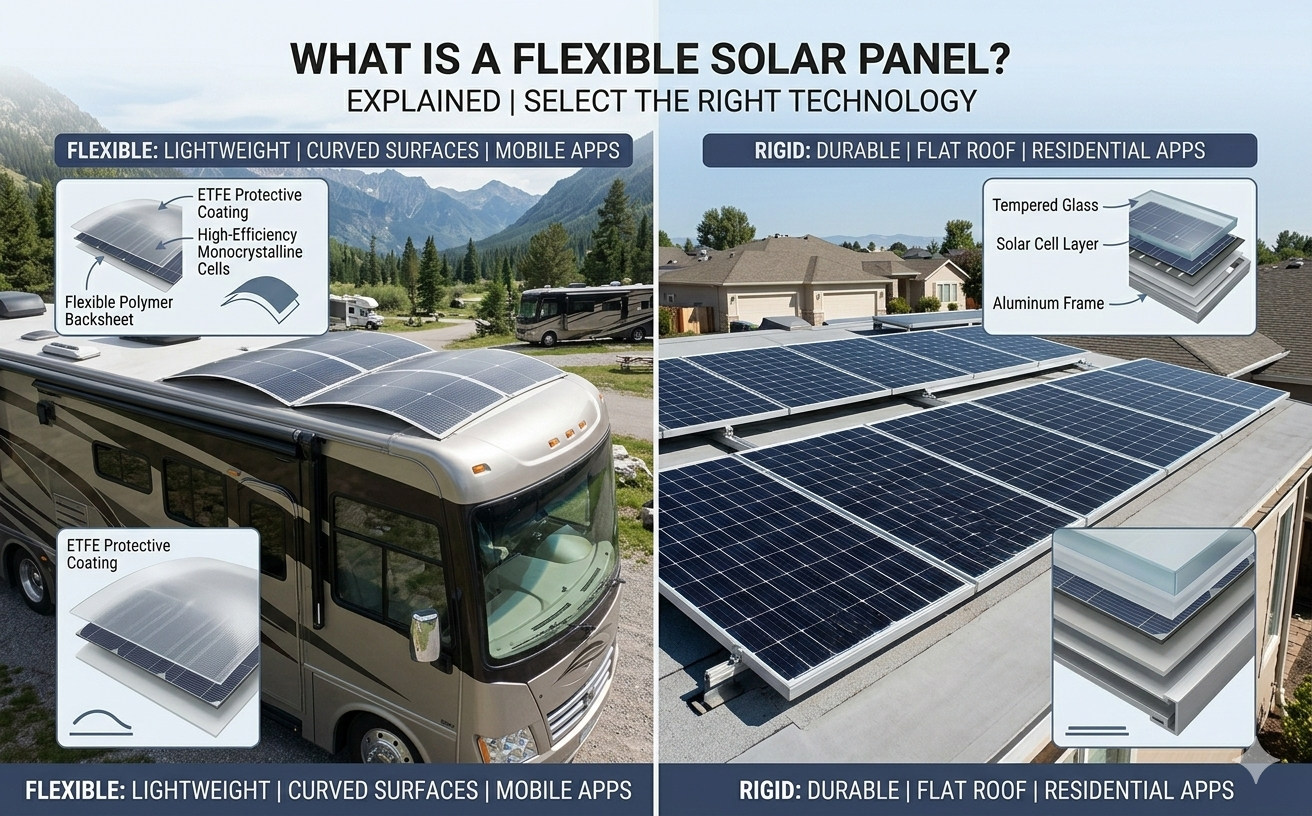
Where Are Flexible Solar Panels Used?
Flexible solar panels are ideal when weight and shape flexibility matter.
1. RV and Camper Vans
They can be directly attached to curved vehicle roofs, providing power for off-grid travel.
2. Marine and Boats
Boats benefit from lightweight solar panels that can conform to deck curvature.
3. Portable Solar Systems
Camping, hiking, and emergency backup systems often use foldable flexible solar panels.
4. Temporary or Lightweight Structures
Tents, temporary shelters, and mobile kiosks can integrate flexible solar solutions.
These panels integrate easily into a complete solar system with batteries, inverters, and charge controllers.
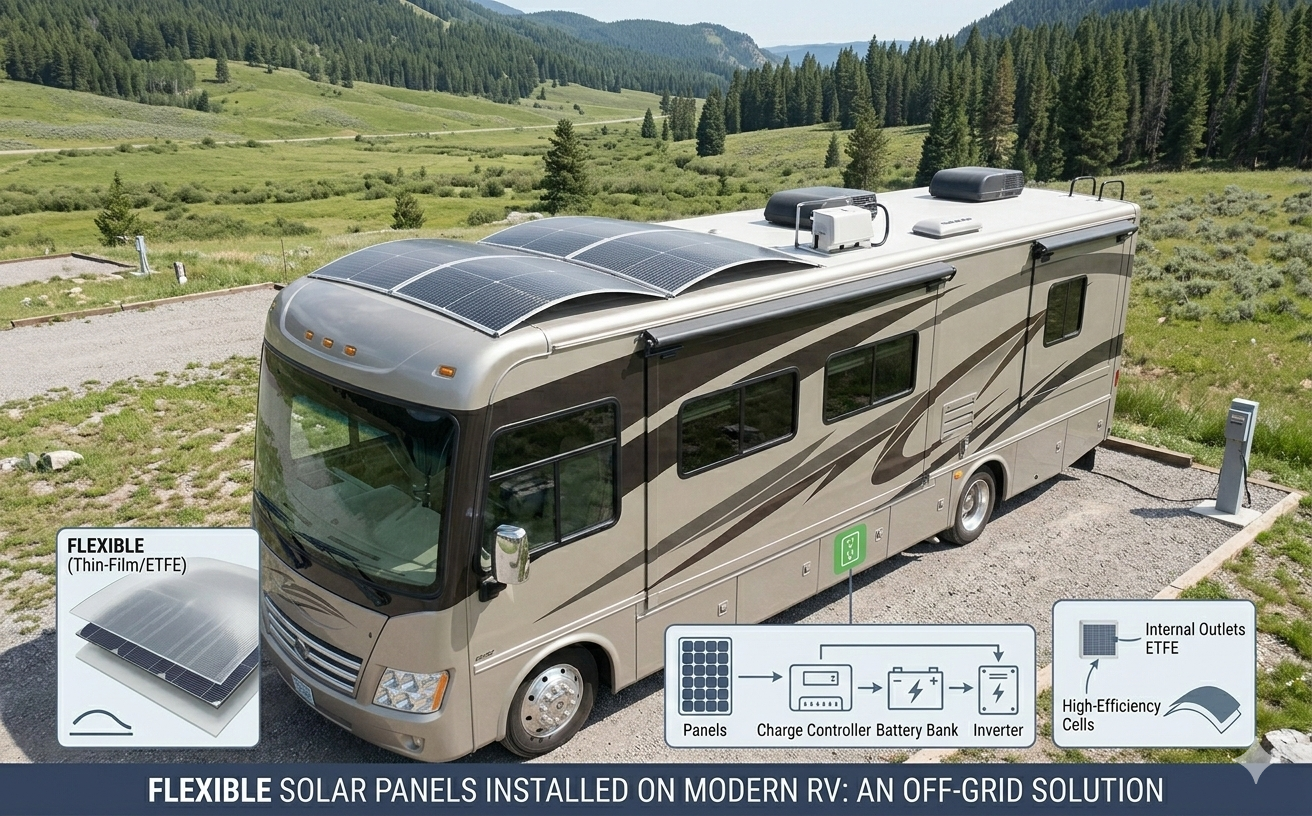
Advantages of Flexible Solar Panels
When customers search “what solar option is best for mobile use,” the answer often includes these benefits:
Lightweight design
Easy transportation
Lower installation cost
Adaptability to curved surfaces
Ideal for off-grid solar systems
For OEM buyers and distributors, flexible panels also reduce shipping costs due to thinner packaging.
Are Flexible Solar Panels Durable?
Modern flexible solar panels use ETFE surface coatings for UV resistance and improved durability.
However, compared with glass solar panels, they:
May have slightly shorter lifespan (typically 10–15 years)
Are less impact-resistant
Require proper surface support during installation
For permanent rooftop solar power systems, rigid panels remain the standard choice. For mobility and portability, flexible panels are unmatched.
Efficiency and Performance
High-quality monocrystalline flexible solar panels can reach:
18%–23% efficiency
Stable performance under moderate shading
Good heat dissipation due to thin design
They perform well in small-scale solar systems and auxiliary power setups.
Is a Flexible Solar Panel Right for You?
Choose flexible solar panels if:
✔ You need lightweight solar modules
✔ Your installation surface is curved
✔ You are building an RV or marine solar system
✔ You require portable solar charging
Choose traditional solar panels if:
✔ You want maximum long-term durability
✔ You are installing a residential rooftop solar system
✔ You need large-scale commercial solar power generation
Final Thoughts
So, what solar solution should you choose?
Flexible solar panels are an innovative and practical option for mobile, lightweight, and off-grid solar systems. While they may not replace traditional rooftop solar panels, they play a critical role in modern renewable energy applications.
As solar technology continues to evolve, flexible photovoltaic panels are becoming more efficient, durable, and widely adopted worldwide.
For OEM, wholesale, or custom solar panel manufacturing solutions, choosing a reliable supplier ensures long-term system performance and customer satisfaction.