


Complete Beginner’s Guide
Learn what a solar power system is, how it works, key components, system types, and how to choose the right solution for home or business use.
What Is a Solar Power System?
A solar power system is an energy solution that converts sunlight into electricity for residential, commercial, and industrial use. By using solar panels and supporting electrical components, a solar power system allows users to generate clean, renewable energy and reduce dependence on traditional fossil fuels.
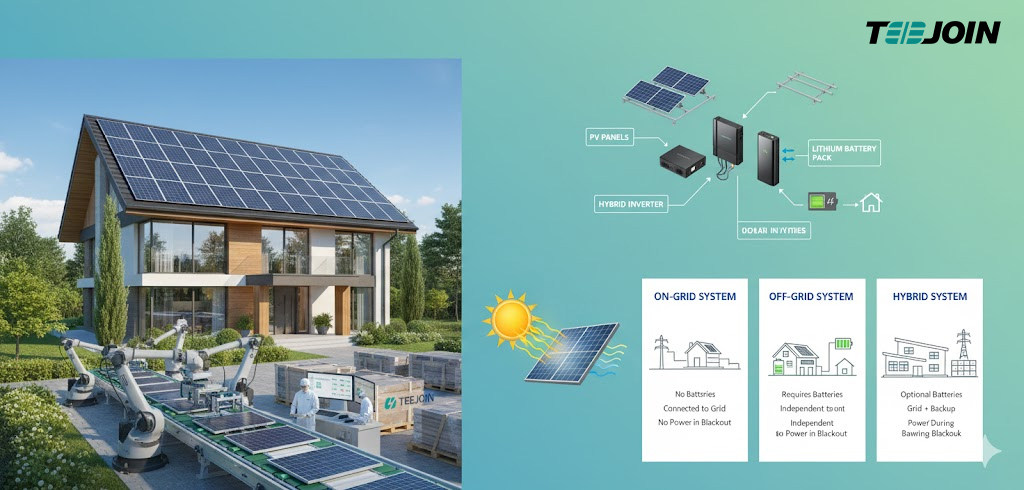
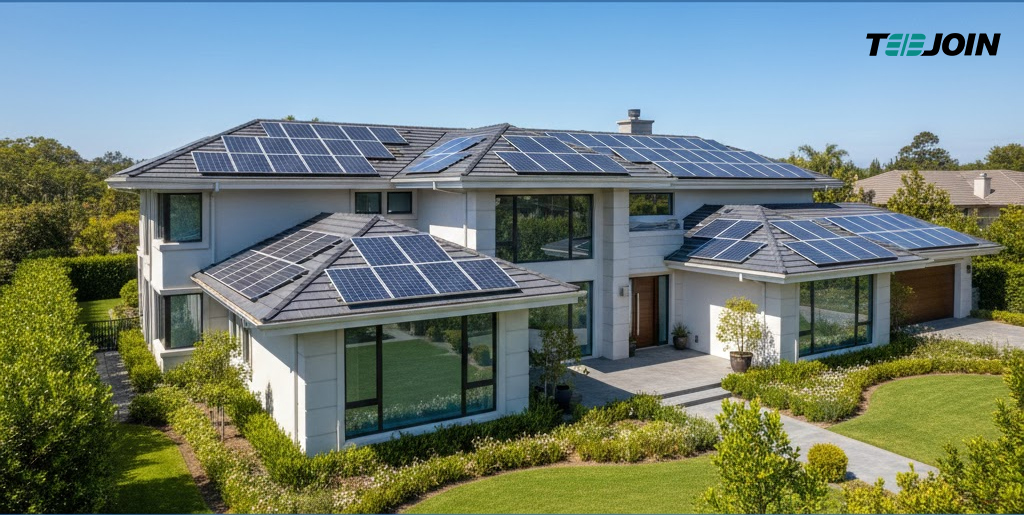
As global electricity costs continue to rise and environmental regulations become stricter, solar power systems are increasingly adopted worldwide. From private homes to factories, warehouses, and commercial buildings, solar energy is now a mainstream power solution.
Main Components of a Solar Power System
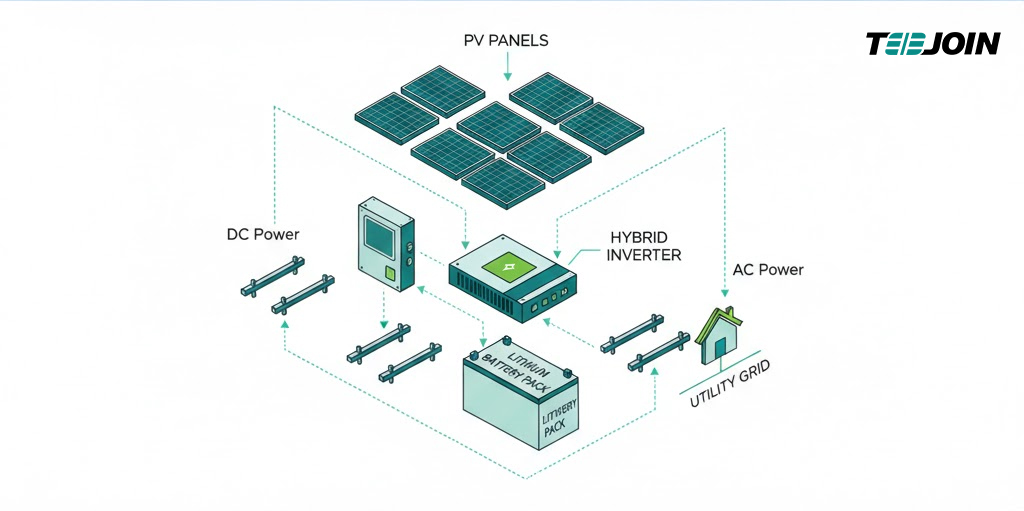
A complete solar power system consists of several key components working together to ensure safe and efficient electricity generation.
1. Solar Panels
Solar panels are the core of the system. They capture sunlight and convert it into direct current (DC) electricity using photovoltaic (PV) cells. Common panel types include monocrystalline, polycrystalline, and bifacial solar panels.
2. Solar Inverter
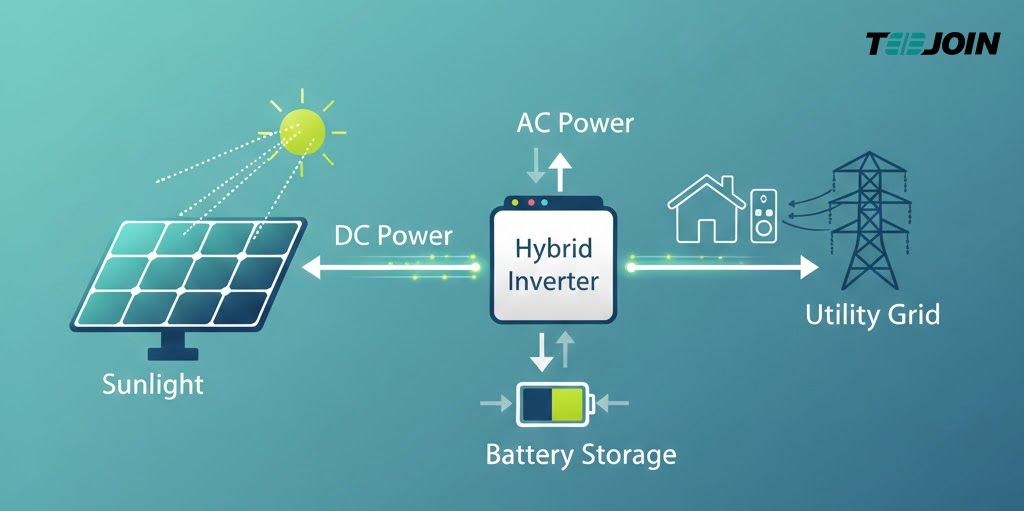
The inverter converts DC electricity generated by solar panels into alternating current (AC), which is used by most household and commercial electrical appliances.
3. Mounting Structure
Mounting systems securely fix solar panels on rooftops or ground installations. Proper tilt and orientation help maximize energy production.
4. Battery Storage (Optional)
Batteries store excess solar energy for use at night or during power outages. They are commonly used in off-grid and hybrid solar systems.
5. Electrical Protection & Accessories
These include combiner boxes, circuit breakers, cables, and monitoring systems to ensure safety and stable operation.
How Does a Solar Power System Work?
A solar power system works by converting sunlight into usable electricity through the photovoltaic effect.
When sunlight hits the surface of a solar panel, photons excite electrons inside the solar cells. This movement generates DC electricity. The inverter then converts DC power into AC power, making it suitable for daily use.
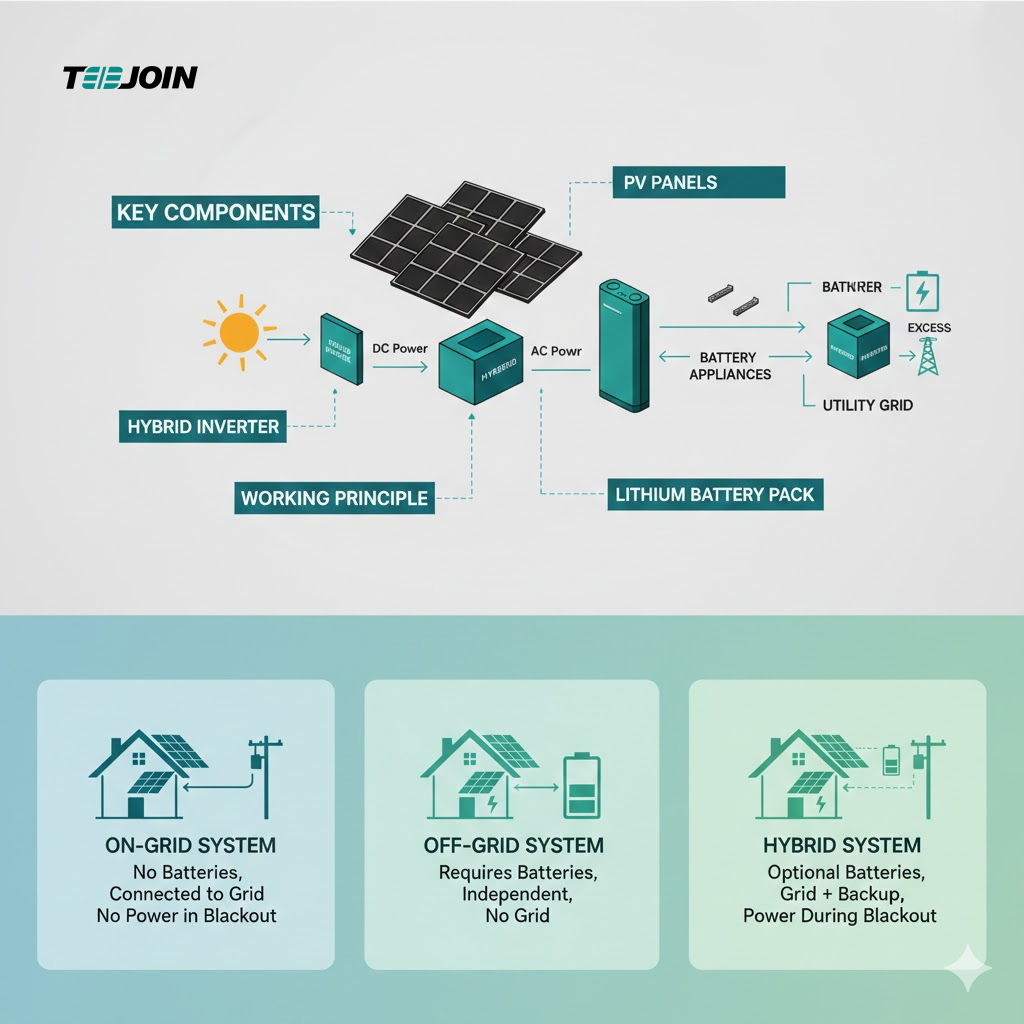
Depending on system design, excess electricity can be stored in batteries or exported to the utility grid. This process allows users to optimize energy usage and reduce electricity bills.
Types of Solar Power Systems
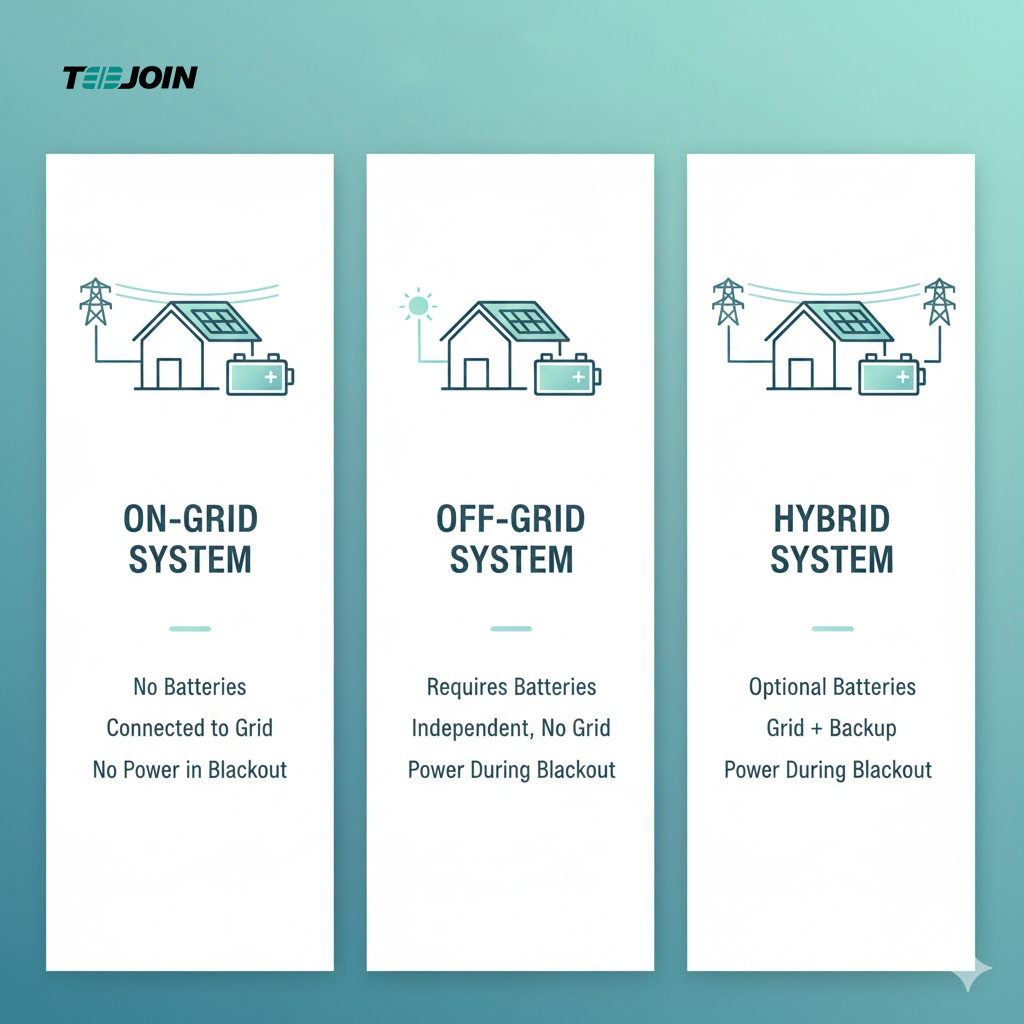
There are three main types of solar power systems, each designed for different application scenarios.
| System Type | Best For | Key Feature |
| On-Grid | Urban Homes | Lowest cost, no battery needed. |
| Off-Grid | Remote Areas | Full independence, relies on batteries. |
| Hybrid | Modern Homes | Grid-tied with battery backup security. |
On-Grid Solar Power System
An on-grid system is connected directly to the utility grid. It is the most cost-effective solution and allows users to feed surplus electricity back to the grid. However, it does not provide power during grid outages.
Off-Grid Solar Power System
Off-grid systems operate independently without grid connection. They rely on battery storage and are suitable for remote areas, rural regions, or locations with no stable electricity supply.
Hybrid Solar Power System
Hybrid systems combine grid connection with battery storage. They offer energy independence, backup power, and flexibility, making them increasingly popular for homes and commercial buildings.
Advantages of Solar Power Systems
Solar power systems offer several long-term benefits:
Renewable and environmentally friendly energy source
Reduced electricity bills and operational costs
Low maintenance requirements
Long system lifespan (25+ years for solar panels)
Energy independence and power security
With continuous technological advancements, modern solar systems deliver higher efficiency and better reliability than ever before.
Applications of Solar Power Systems
Solar power systems are widely used in different sectors:
Residential homes and villas
Commercial buildings and offices
Industrial factories and warehouses
Agricultural and irrigation systems
Remote and off-grid installations
Customized system design ensures optimal performance for each application.
How to Choose the Right Solar Power System
When selecting a solar power system, consider the following factors:
Daily electricity consumption
Installation location and available space
Grid availability and stability
Budget and return on investment expectations
Future expansion plans
Working with an experienced solar power system manufacturer helps ensure correct system sizing, product compatibility, and long-term performance.
Why Choose a Professional Solar Power System Manufacturer?
Choosing a reliable manufacturer is critical for system safety and durability. A professional supplier provides certified products, strict quality control, and technical support.
Teejoin Solar, a brand of Guangdong Aurora Solar Technology Co., Ltd., specializes in manufacturing solar panels, energy storage systems, and complete solar power solutions. With an annual production capacity of 300MW and global project experience, we support residential, commercial, and industrial solar projects worldwide.
Conclusion
A solar power system is a smart and sustainable energy investment for the future. By understanding system components, working principles, and system types, users can make informed decisions and maximize the benefits of solar energy.
Whether for home use or large-scale commercial applications, a properly designed solar power system provides reliable, clean, and cost-effective electricity for decades.
Ready to switch to clean energy? >
Link to:
How Do Solar Panels Work?