


Key Differences, Pros & How to Choose
On-Grid vs Off-Grid vs Hybrid Solar Systems: Key Differences Explained
Introduction
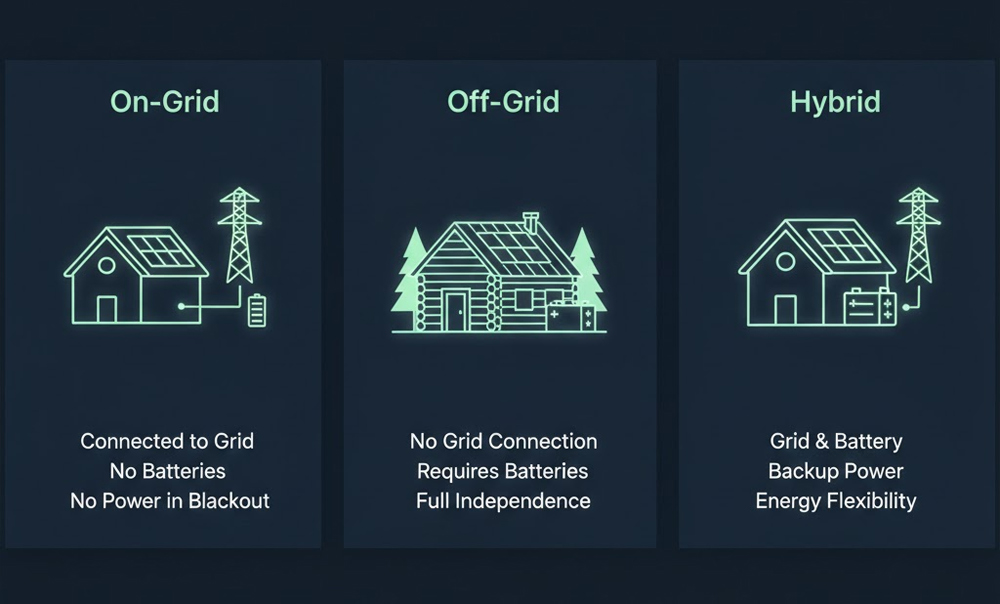
Choosing the right solar power system is one of the most important decisions when planning a solar project. The three most common system types are on-grid, off-grid, and hybrid solar systems.
Each system has its own advantages, limitations, and ideal applications. Understanding the differences helps homeowners, businesses, and project developers select the most cost-effective and reliable solution.
What Is an On-Grid Solar System?
An on-grid solar system, also known as a grid-tied system, is directly connected to the public electricity grid.
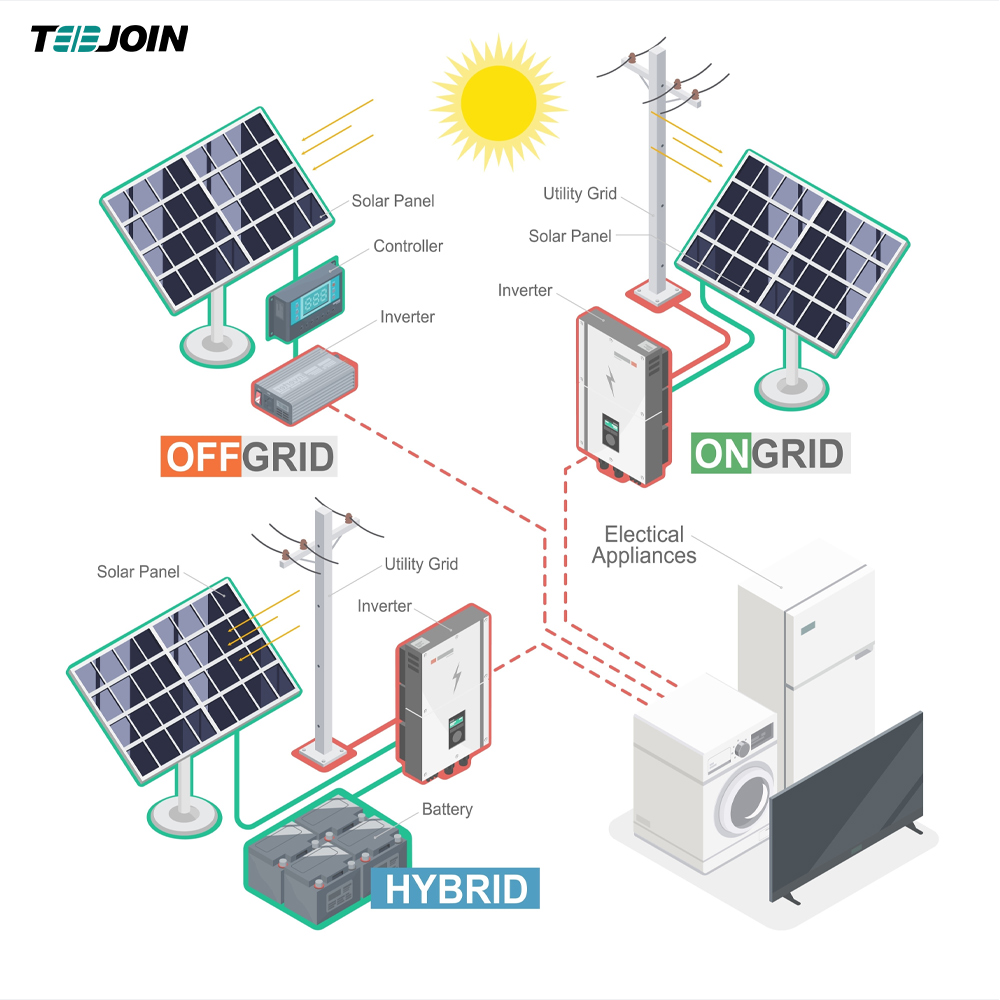
Solar panels generate electricity during the day, supplying power to connected loads. Any excess energy is exported to the grid, often allowing users to receive credits through net metering programs.
Advantages of On-Grid Systems
Lowest upfront cost
High system efficiency
Ability to sell excess electricity to the grid
Simple system design
Disadvantages of On-Grid Systems
No power during grid outages
Dependence on utility grid stability
On-grid systems are ideal for urban homes and commercial buildings with reliable grid access.
What Is an Off-Grid Solar System?
An off-grid solar system operates independently without any connection to the utility grid. It relies entirely on solar panels and battery storage to supply electricity.
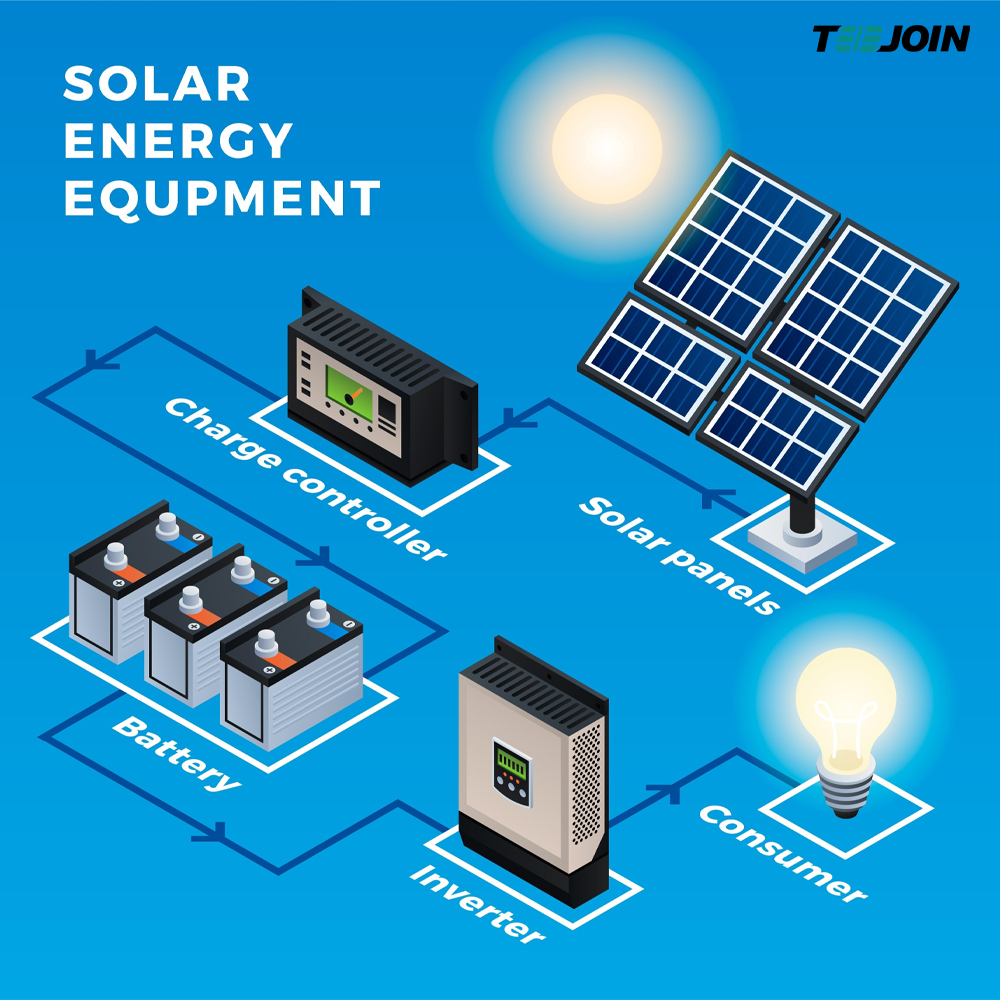
Energy generated during the day is stored in batteries and used at night or during cloudy conditions. Off-grid systems are commonly installed in remote locations where grid access is unavailable.
Advantages of Off-Grid Systems
Complete energy independence
Suitable for remote or rural areas
No electricity bills
Disadvantages of Off-Grid Systems
Higher initial investment
Requires battery storage and careful system design
Limited expansion flexibility
Off-grid systems require precise sizing to ensure reliable power supply throughout the year.
What Is a Hybrid Solar System?
A hybrid solar system combines solar panels, battery storage, and grid connection into a single system.
During the day, solar panels power loads and charge batteries. Excess energy can be exported to the grid. At night or during outages, stored energy provides backup power.
Advantages of Hybrid Systems
Backup power during outages
Energy storage for peak usage
Grid interaction and flexibility
Improved energy management
Disadvantages of Hybrid Systems
Higher upfront cost than on-grid systems
More complex system configuration
Hybrid systems are increasingly popular for homes and businesses seeking energy security and flexibility.
On-Grid vs Off-Grid vs Hybrid: Comparison Table
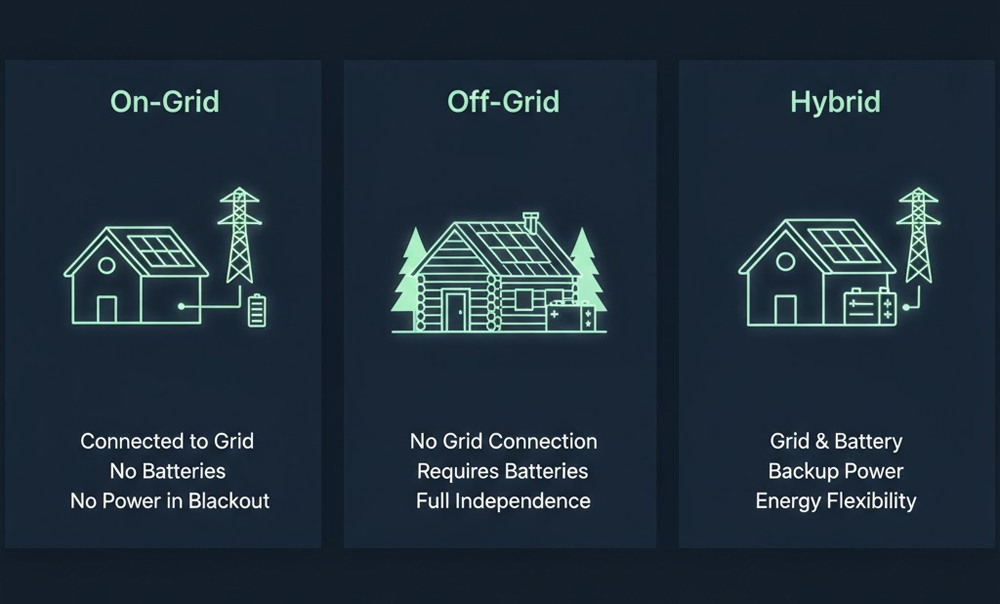
| Feature | On-Grid | Off-Grid | Hybrid |
|---|---|---|---|
| Grid Connection | Yes | No | Yes |
| Battery Storage | Optional | Required | Required |
| Backup Power | No | Yes | Yes |
| Initial Cost | Low | High | Medium–High |
| Energy Independence | Low | High | High |
| Ideal Use Case | Urban areas | Remote locations | Homes & businesses |
Which Solar System Is Best for You?
The best solar system depends on several key factors:
Grid reliability: Frequent outages favor hybrid systems
Location: Remote areas require off-grid solutions
Budget: On-grid systems offer the lowest entry cost
Energy security needs: Hybrid systems provide backup power
Consulting with a professional solar system provider helps ensure correct system sizing and component selection.
Applications of Different Solar Systems
On-grid: Residential rooftops, offices, commercial buildings
Off-grid: Remote homes, telecom stations, agricultural systems
Hybrid: Villas, factories, hospitals, data centers
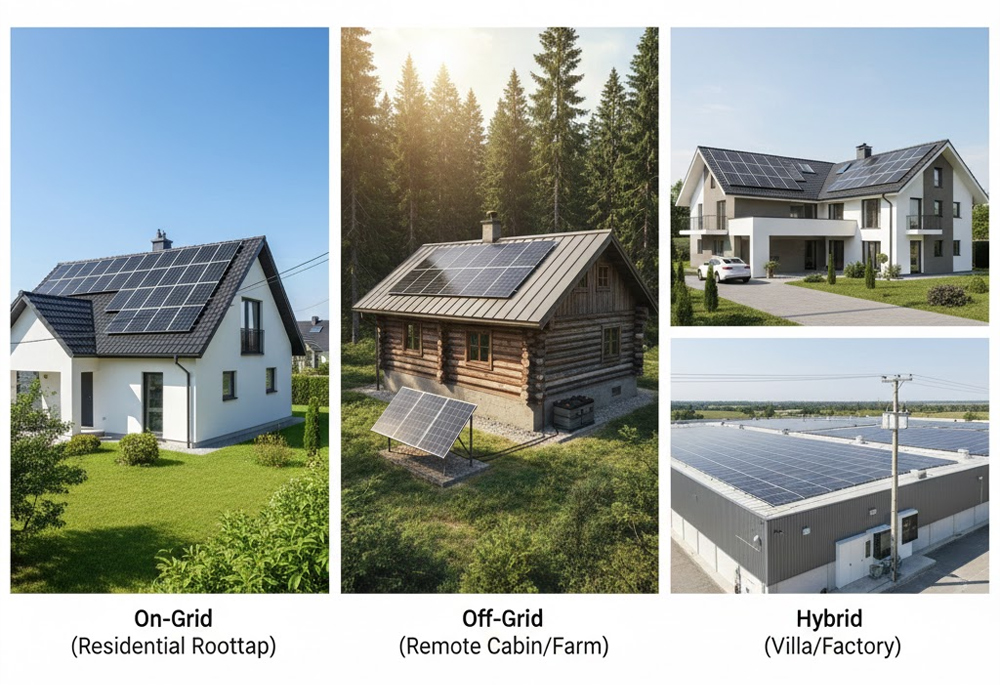
Each system type plays a critical role in modern energy solutions.
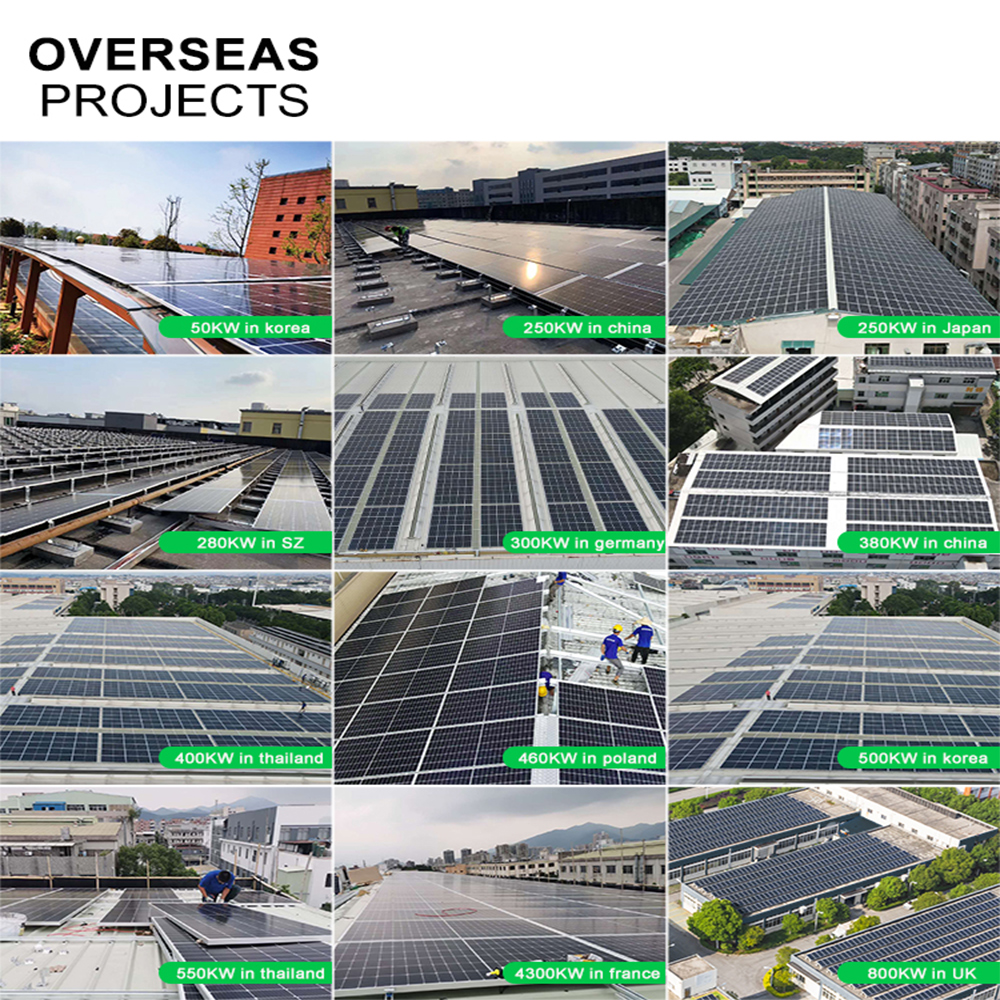
Powering the World, One Project at a Time Our diverse portfolio showcases TeeJoin’s ability to engineer solar systems for any environment. Whether it’s a high-standard industrial rooftop in Europe or a large-scale solar farm in Asia, our professional team provides customized, "Factory Direct" solutions that meet rigorous international standards.
Choosing a Reliable Solar System Manufacturer
System performance and safety depend heavily on component quality and system design.
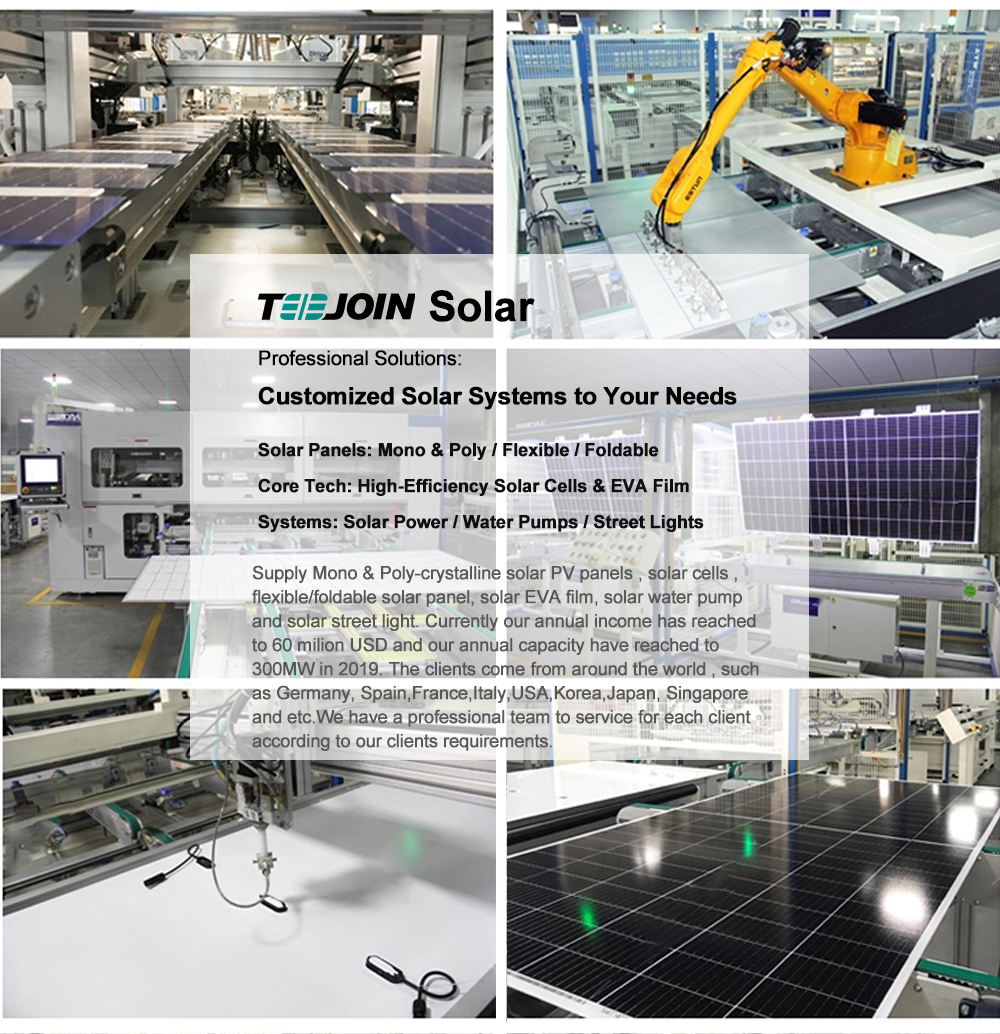
Teejoin Solar, a brand of Guangdong Aurora Solar Technology Co., Ltd., provides complete solar power solutions including panels, inverters, energy storage, and system design services. With extensive global experience, we help customers choose the most suitable solar system for their specific needs.
Conclusion
On-grid, off-grid, and hybrid solar systems each serve different purposes. Understanding their differences allows users to make informed decisions based on location, budget, and energy requirements.
With the right system design and quality components, solar power offers a reliable and sustainable energy solution for both residential and commercial applications.
Link to:
What Is a Solar Power System?Link to:
What Is a Hybrid Solar System?